

Richmond Movers, From Point Richmond to the Hilltop
Hayward Branch
23510 Bernhardt St
Hayward, CA 94545
Call
Hours
Mon–Fri: 8 AM–9 PM
Sat–Sun: 8 AM–6 PM
Meathead Movers handles local moves across Richmond, from hillside homes in Point Richmond and condos at Marina Bay to wartime cottages in Central Richmond and apartments near the Hilltop. Richmond is a West Contra Costa County city of about 114,861 people (2025 Census estimate), stretched along both San Francisco Bay and San Pablo Bay, with I-80 and I-580 running through town. Much of its housing is old, with nearly 44% of homes built before 1960, and City code lets moving trucks park on residential streets only while they’re actively loading. Our Athlete Movers serve Richmond from our Hayward branch.
Richmond Moves at a Glance
- Service area: All of Richmond, plus El Cerrito, San Pablo, El Sobrante, Pinole, Hercules, Albany, Kensington, and Berkeley
- Typical move: A two- or three-bedroom house; 65% of Richmond homes have two or three bedrooms
- Truck access: Large trucks can stop on residential streets only while loading or unloading household goods at that address
- Older homes: About 44% of homes were built before 1960, with steep front steps and narrow doors
- Busiest stretch: Mid-June through mid-August, between West Contra Costa Unified’s June 10 last day and August 18 first day
- Lead time: 2 to 3 weeks for most moves, and 4 to 6 weeks for summer, month-end weekends, and condo moves
- Pricing: Hourly under California’s MAX 4 tariff, beginning with a free quote

The Meathead Difference
Why Choose Meathead Movers Richmond
Team Meathead is made up of athletes driven by hustle, heart, and integrity. Our Richmond team has been proudly serving Bay Area from day one, providing best-in-class moving, packing, and storage services for local families and businesses. Every job is powered by good energy — from transparent pricing to real-time communication and our white-glove standard of care — because this community isn’t just where we work, it’s home.
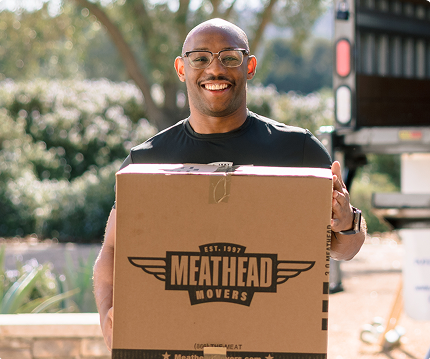
Honest athletes
Professional, background-checked, and trained with heart, so you can trust who is in your home, handling your belongings.
More hustle, less hassle
We move fast, smart, and jog when our hands aren’t full—often finishing sooner and costing less than slower crews.
Tech-forward moves
We use advanced tools to keep your move efficient and transparent, letting you track your moving truck and belongings throughout the entire process.
Performance that pays off
Our movers are rated on every job and earn bonuses for exceptional service and not damaging your items. That means you get a highly motivated team of focused and incentivized athletes working to make your move as easy as possible.


Community champions
We’re not just in the community; we’re part of it. We show up for local causes, support our neighbors, and move victims of domestic violence to safety at no cost. We’re there when it matters most.
Greatness guaranteed
If something falls short, we make it right with our fair refund assurance program. No runaround, just accountability.
Why Do Richmond Residents Choose Meathead Movers?
Meathead Movers started in 1997 as a small California company and has grown into the largest independent moving company in California. Our Hayward branch serves Richmond and the rest of the East Bay, and our crews know the hillside streets, older homes, and I-80 traffic that make moves here different. Every Richmond move comes with:
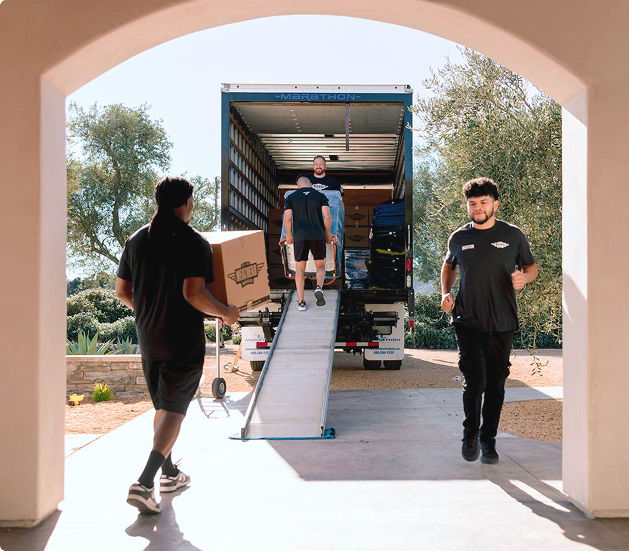
- Athlete Movers: Background-checked, drug-tested, and professionally trained movers who jog between loads
- The same crew all day: The team that loads your home unloads it at the new one.
- Clear estimates: Upfront pricing with no hidden fees
- Fair Refund Assurance: Every move is backed by our Fair Refund Assurance.
- 29,000+ reviews: More than 29,000 customer reviews across our California locations
- A+ BBB rating: An A+ rating from the Better Business Bureau
- Fully licensed: CAL T-189849, USDOT #921143, and MC-398077
- Payment plans: Qualifying customers can pay over time through Affirm.
Richmond Leadership
Local Team Snapshot
Meet the management team leading your Richmond move.

Jordan Watts
Operations Manager
Jordan Watts is the Operations Manager of Meathead Movers’ Hayward branch, a role he earned through years of dedication and hard work within the company…

Rachel Keyes
Territory Sales Manager
Rachel Keyes is the Territory Sales Manager for Meathead Movers’ East Bay branch. Originally from Santa Margarita, California, Rachel attended Atascadero…
Services in Richmond

Which Richmond Neighborhoods Do We Serve?
We serve every Richmond neighborhood, from the bayfront to the hills. Richmond’s city limits are unusual: the City of San Pablo and unincorporated North Richmond sit almost entirely inside them, and El Sobrante, East Richmond Heights, and Kensington border the city. Those unincorporated areas follow Contra Costa County rules instead of City code, so we check the jurisdiction for every address.
Which ZIP Codes Cover Richmond?
Some Richmond ZIP codes are shared with San Pablo, El Sobrante, or El Cerrito. These are the main ZIP codes our crews cover:
- 94801: Central and western Richmond, including downtown and Point Richmond
- 94804: Southern Richmond toward Marina Bay and El Cerrito, entirely inside the city
- 94805: East-central Richmond
- 94806: The north side around the Hilltop, shared with San Pablo
- 94803: The northeast hills, shared with El Sobrante
Which Richmond Neighborhoods Do Our Crews Know Best?
Richmond breaks roughly into four areas: the Hilltop and El Sobrante side to the north, Central and East Richmond, downtown and the Iron Triangle, and Point Richmond and Marina Bay to the south. These are the neighborhoods our crews work in most:
- Southern waterfront: Point Richmond, Seacliff, and Marina Bay
- Downtown and central: The Iron Triangle, Atchison Village, the Metro Walk and Transit Village area, and North & East
- South and east: The Richmond Annex and Richmond Heights
- North side: The Hilltop area, Country Club Vista, San Marcos, and Parchester Village
Do You Move Into Gated and HOA Communities in Richmond?
Yes. Seacliff’s terraced waterfront homes, the condos and townhomes at Marina Bay, and the developments around the Richmond Country Club and the Hilltop often have HOA move rules, and some have gates. We send crew names and truck size ahead of time and check each community’s procedures when we book.
What Areas Near Richmond Do We Serve?
Many Richmond moves are short trips along I-80 or across the bridge. Our crews also cover these nearby areas:
- Inside and around the city: San Pablo, North Richmond, Rollingwood, and East Richmond Heights
- North: El Sobrante, Pinole, Tara Hills, and Hercules
- South: El Cerrito, Kensington, Albany, and Berkeley
- Across the bridge: San Rafael and southern Marin
Which Meathead Movers Pages Cover Areas Near Richmond?
Moving between Richmond and a nearby city? These Meathead Movers pages cover the areas around Richmond:
What Should You Know About Richmond Roads and Parking?
Richmond sits on two interstates and a bridge, so traffic shapes most moves here. Workers average a 34.2-minute commute, and westbound I-80 through Richmond backs up badly on weekday mornings. City code also limits where big trucks can park and drive, so we plan the route and the curb before moving day.
Which Roads Do Our Drivers Use Most?
These are the Richmond routes our drivers rely on most:
- I-80: The Eastshore Freeway through the east and northeast side, toward Berkeley and Pinole
- I-580: Along the southern waterfront through Point Richmond to the Richmond-San Rafael Bridge
- Richmond Parkway: The west-side route connecting I-580 near Point Richmond to the Hilltop and I-80
- San Pablo Avenue: State Route 123, through Richmond and San Pablo
- City streets: Macdonald Avenue, Cutting Boulevard, 23rd Street and Marina Bay Parkway, Barrett Avenue, and Carlson Boulevard
Union Pacific and BNSF trains run through town, and a train at a crossing can hold up a truck, so we leave a little slack in routes that cross the tracks.
Can a Moving Truck Park on a Richmond Street?
Only while it’s loading or unloading. Richmond Municipal Code 14.44.110 bars trucks rated over two tons from stopping or parking on any street, alley, or parkway in a residence district, unless they’re actively delivering or picking up household goods, furniture, or appliances at the adjacent home, and only while loading is in progress. These are the Richmond parking rules we plan around:
- No staging: We don’t park the truck on your street before or after the job, so we arrive the morning of the move.
- No overnight trucks: Commercial vehicles over 84 inches wide or 78 inches high can’t park on any street for more than an hour between 1 and 6 a.m. (14.44.080).
- Backing to the curb: A truck that’s loading may back up to the curb if it stays short of the center line and leaves at least 11 feet of open roadway (14.44.040).
- Yellow zones: Commercial loading is limited to 20 minutes, 7 a.m. to 6 p.m., except Sundays and holidays (14.48.020).
- Alleys: Vehicles can stop in alleys only to load or unload (14.48.060).
- 72-hour limit: No vehicle can stay on a street or alley for more than 72 hours (14.40.050).
Which Richmond Streets Have Truck Limits?
Vehicles over 3 tons have to use the City’s signed truck routes, and some streets carry posted weight limits. City code lets trucks leave those routes only by a direct path to make a pickup or delivery (14.52.030 and 14.52.050). These are the truck rules our drivers plan around:
- Direct route in: From the nearest truck route, we take the shortest legal path to your home.
- Weight-limit streets: A truck over a posted limit can’t park anywhere it would have to reach by that street, outside the delivery exception (14.40.055).
- Downtown hours: In the central traffic district, freight vehicles wider than 8.5 feet or towing trailers need a police permit from 7 a.m. to 6 p.m. (14.52.010).
- Narrow streets: The City can post no-parking zones on streets 20 to 30 feet wide, which limits where a truck can stop (14.40.100).
What Makes Point Richmond and the Hills Different?
Point Richmond’s historic streets and the hillside neighborhoods are the hardest parts of Richmond for a moving truck. These are the conditions we plan for:
- Steep grades: City code requires curbed wheels on any grade over 3%, and some hillside streets are far steeper than that.
- Narrow streets: Some streets allow parking on only one side, or none, so the truck may stop farther from the door.
- Long carries: Terraced lots in Seacliff and hillside homes mean outdoor stairs and longer walks.
- Smaller trucks: Some jobs call for a smaller truck or a shuttle.

What Kinds of Homes Do We Move in Richmond?
Richmond has a wide mix of homes. Of about 42,500 homes, 59.9% are detached houses, 8.9% are townhomes or attached homes, and about 10% are in buildings with 20 or more units (ACS 2020-2024). Owners and renters are close to even, at 55% and 45%, and rental vacancy is only 2.0%, so apartments rarely sit empty. Much of the housing is old: 17.6% of homes date from the 1940s, when the shipyards drew thousands of workers, and another 15.2% from the 1950s.
How Do Older Central Richmond Homes Affect a Move?
Central Richmond, the Iron Triangle, Atchison Village, North & East, and the Richmond Annex are full of 1940s and 1950s houses and cottages. These are the conditions that add time:
- Steep front steps: Raised houses mean stairs at the door, even on one-story homes.
- Small rooms: Tight hallways and doorways for sofas, dressers, and box springs
- Detached garages: Many sit at the back of the lot down a narrow driveway.
- Limited curb space: Older blocks have narrow lots and lots of parked cars.
What About Point Richmond, Seacliff, and the Hills?
Point Richmond has older homes on steep, narrow streets, and Seacliff’s luxury homes sit on a terraced hillside above the water. Richmond Heights and the Country Club Vista area have hillside and cul-de-sac tract homes. These moves often involve exterior stairs, split-level layouts, and careful truck placement on a grade.
What Should Condo and Apartment Residents Plan For?
Marina Bay has condos, townhomes, and apartments, and the San Marcos buildings near the Hilltop are multistory condos. Newer Transit Village units sit next to the BART station. These buildings usually require:
- Elevator reservations: A booked time window, with pads installed before loading starts
- Certificate of insurance: A COI naming the HOA or management company
- Assigned loading areas: Garage or curb spots the building sets aside for moves
- Move hours: Weekday or weekend windows set by the HOA
Which Items Do We Plan For Most in Richmond?
Some belongings need extra care in Richmond’s older and hillside homes:
- Pianos
- Heirloom and antique furniture
- Sofas and box springs that have to clear narrow doors
- Bikes and outdoor gear
- Artwork and mirrors
- Patio furniture from decks and terraces
For high-value items, ask about our Packing and Valuation options when you book.
Do We Handle Commercial Moves in Richmond?
Yes. Richmond is an industrial and port city with a large health care and government presence. Commercial moves here often involve medical offices, federal and county offices, school district sites, and waterfront business parks.
Which Major Employers Are Based in Richmond?
These are Richmond’s largest employers, according to the City’s 2024-25 Annual Comprehensive Financial Report:
- Chevron Refinery: 3,157 employees
- Kaiser Foundation Hospitals: 1,442 employees
- United Parcel Service: 1,332 employees
- Social Security Administration: 1,259 employees
- West Contra Costa Unified School District: 1,167 employees
- Amazon.com Services: 1,121 employees
- The Permanente Medical Group: 1,051 employees
- U.S. Postal Service: 1,047 employees
- Contra Costa County: 844 employees
- City of Richmond: 800 employees
Where Are Richmond's Business Districts?
Commercial moves in Richmond cluster in a few areas. Our commercial crews work in these districts:
- Downtown and Macdonald Avenue: City and county offices, storefronts, and the Metro Walk area by the BART station
- 23rd Street: A busy commercial corridor of shops and small offices
- Hilltop: Offices and services around The Shops at Hilltop
- Marina Bay: Waterfront offices and business parks
- Point Richmond: A small historic commercial district
- Port and industrial areas: Offices along Richmond Parkway and near the Port of Richmond
Federal offices may require security screening, and school district jobs go through formal procurement.

How Do School Calendars Shape Richmond Moves?
West Contra Costa Unified School District, based in Richmond, serves the city and its west county neighbors. WCCUSD’s 2026-27 school year runs from Tuesday, August 18, 2026, to Thursday, June 10, 2027, so families have about two months to move between school years. These are the WCCUSD dates that shape Richmond moves:
- Summer break: June 11 to August 17, the main family moving window
- Thanksgiving holiday: November 26 and 27, 2026
- Winter recess: December 21, 2026, to January 1, 2027
- Presidents’ Week recess: February 15 to 19, 2027, a full week off
- Spring recess: The week of April 5, 2027
Do College Schedules Affect Richmond Moves?
Somewhat. Contra Costa College is next door in San Pablo, and UC Berkeley is about 7 miles south, so some students and university staff rent in Richmond. Those rentals tend to turn over in late spring and again in August. UC Berkeley’s Richmond Field Station is a research site, not student housing.
When Is the Best Time to Move in Richmond?
For the easiest booking, pick a midweek, midmonth date between September and May, outside storm days, and start early to beat the afternoon wind. Richmond’s weather is mild, but it changes across the city’s microclimates. The National Weather Service San Francisco Bay Area office covers Richmond and is the best source for current conditions.

When Is Moving Season Busiest in Richmond?
These Richmond dates fill first:
- Mid-June through mid-August: WCCUSD families move between school years.
- Late spring and August: Student and staff rentals tied to UC Berkeley turn over.
- Month-end: About 45% of households rent, so the last and first days of each month book early.
- Presidents’ Week: WCCUSD’s full week off in February gives families a midyear option.
How Far Ahead Should I Book a Richmond Move?
Book 2 to 3 weeks ahead for most Richmond moves. These moves need more lead time:
- June through August: 4 to 6 weeks ahead
- Month-end weekends: 4 to 6 weeks ahead
- Condo and HOA moves: Extra time for elevator reservations and COIs at Marina Bay and Hilltop buildings
- Hillside homes: Extra planning time if a smaller truck or shuttle is needed
How Does Richmond Weather Affect Moving Day?
Richmond has a mild Mediterranean climate. Average highs run from the high 50s in winter to the mid-70s in September, the warmest month, and the city gets about 24 inches of rain a year, mostly from November through March. These are the conditions we plan for:
- Fog: The southern part of the city and the ridges get more fog than the north, which leaves steps and decks damp in the morning.
- Afternoon wind: Winds are strongest from March through August, peaking in June, which makes carrying mattresses and large panels harder.
- Winter rain: We lay floor runners and take extra care on wet, steep streets in Point Richmond and the hills.
- Fall heat: Hot days are rare, with only a few 90-degree days a year, usually in early fall.
Do Wildfires or Refinery Alerts Affect Richmond Moves?
They can. Richmond Heights, the hills near the Hilltop, and homes next to Wildcat Canyon border wildland open space, so we check CAL FIRE hazard maps and red flag warnings during fire season. Contra Costa County can also issue shelter-in-place alerts during refinery or industrial incidents, which can pause outdoor work.
Which Events and Access Rules Affect Richmond Moves?
Richmond’s biggest street closures happen along 23rd Street, Macdonald Avenue, and the Marina Bay waterfront. We check City alerts before booking and plan around these:
- Cinco de Mayo Festival (early May): A festival and parade along 23rd Street.
- Juneteenth Parade and Festival (June): A parade and festival on Macdonald Avenue, with the festival at Nicholl Park.
- 3rd of July Fireworks: The City’s fireworks at Marina Bay Park bring road closures and heavy traffic around Marina Bay in the evening.
- Spirit & Soul Festival (September): Richmond Main Street’s festival runs on Macdonald Avenue downtown.
What Access Rules Apply Around Richmond?
Some Richmond moves need extra coordination. These are the access rules we plan around:
- Residence districts: Trucks on the street only while loading or unloading
- Downtown freight hours: Permits for wide freight vehicles from 7 a.m. to 6 p.m.
- Permit parking areas: Neighborhood permit zones with posted limits
- Condo buildings: Elevator reservations and COIs at Marina Bay and Hilltop buildings
- Road and bridge work: We check City notices and Caltrans closures on I-80, I-580, and the Richmond-San Rafael Bridge.
How Much Does a Local Move in Richmond Cost?
Every Richmond move starts with a free quote, and your total depends on crew size, time on the job, and the drive between homes. California’s billing rules for hourly moves apply to every Richmond job:

- MAX 4 tariff: Local household goods moves follow Maximum Rate Tariff 4, now administered by the Bureau of Household Goods and Services.
- Annual review: Public Utilities Code Section 5191 requires MAX 4 rates to be adjusted at least once a year, on or right after January 1.
- Double drive time: Billable time equals loading time plus unloading time plus twice the actual drive time between your old and new home.
- No warehouse travel: You don’t pay for the drive from our warehouse to your first stop or back from your last stop.
- Multiple trips: When a move takes several trips between the same two addresses, double drive time applies to the first trip only.
- Accurate records: Movers must track time to the minute and provide the Important Notice About Your Move form, plus a Change Order for Services if plans change.
Typical drives from central Richmond run about 10 to 15 minutes across town or to El Cerrito, San Pablo, or El Sobrante, 15 to 25 minutes to Pinole, Hercules, Albany, or Berkeley, and 20 to 30 minutes to Oakland or San Rafael. Those are typical map estimates. Morning traffic on westbound I-80 and bridge backups can stretch them a lot, and since the drive is billed twice, we schedule around the worst hours when we can.
What Adds Hours to a Richmond Move?
These Richmond conditions are the most likely to add time to your invoice:
- Weekday morning traffic on I-80 and bridge backups
- Steep, narrow streets in Point Richmond and the hills
- Long carries and exterior stairs on terraced lots
- Steep front steps and tight doorways in older homes
- Elevator reservations and COIs in condo buildings
- Afternoon wind and winter rain
How Can You Save on a Richmond Move?
A few choices can keep a Richmond move on budget:
- The Meathead Hustle: Our Athlete Movers jog between loads, so hourly moves finish faster.
- Smart timing: Midday and midweek starts avoid the worst I-80 traffic.
- Building prep: Booking your elevator and sending the COI early keeps the crew from waiting.
- Loading/Unloading and On-Site Labor: Lower-cost help if you’re driving your own truck
- Free quotes: Every estimate is free, with no obligation.
What Richmond Customers Say
Ready to plan your Richmond move? Request a free quote online or call our Hayward branch at (510) 422-2051, and we’ll plan the truck, the route, and the crew around your home.
Let’s Make Your Move Happen
Wherever you’re headed next, the Richmond Meathead team is ready to get you there, with hustle, heart, and total professionalism.