
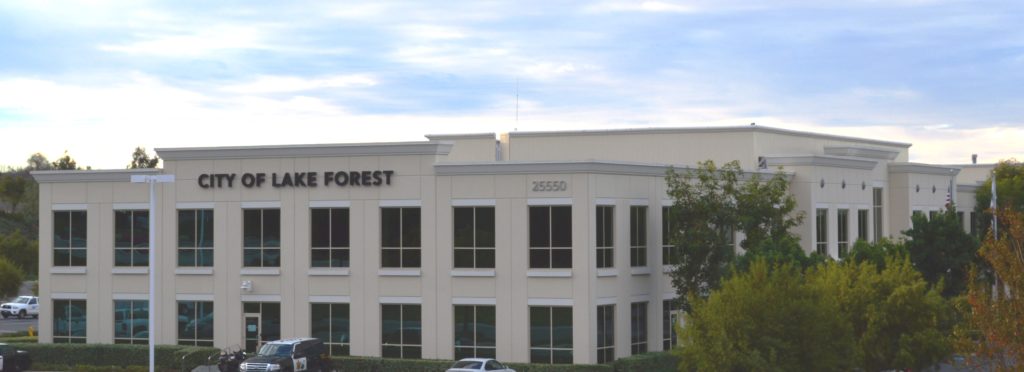
Lake Forest Movers, From Old El Toro to Portola Hills
Anaheim Branch
1405 N Baxter St
Anaheim, CA 92806
Call
Hours
Mon–Fri: 8 AM–8 PM
Sat–Sun: 8 AM–6 PM
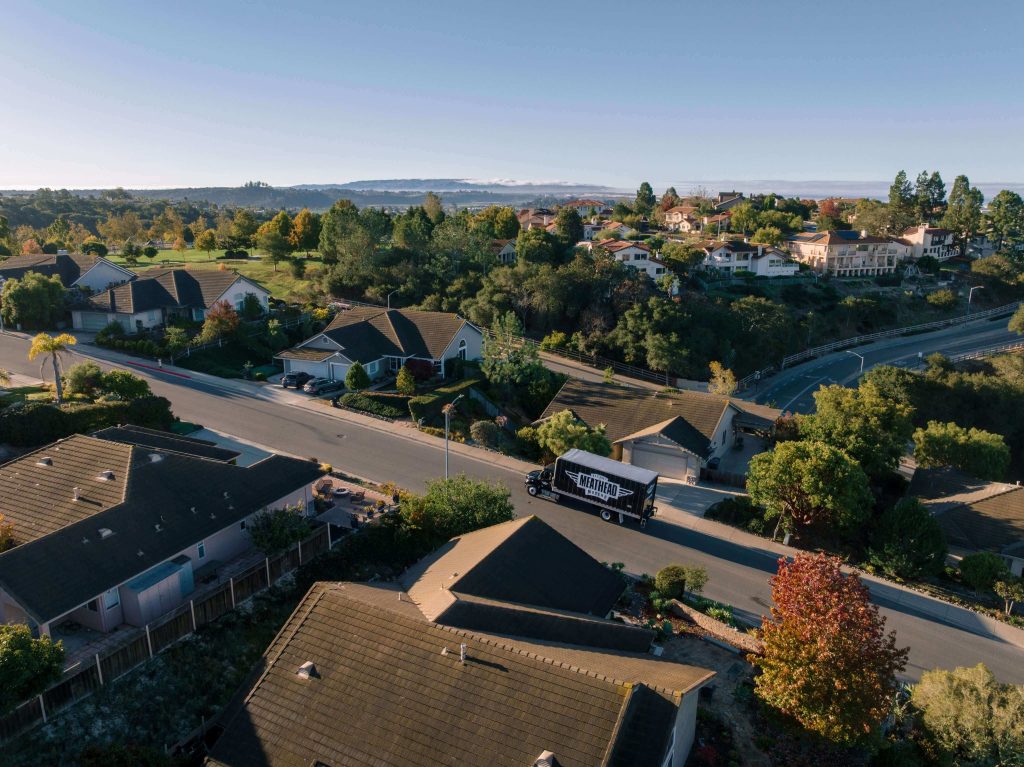
Meathead Movers covers Lake Forest’s full range of homes: 1970s houses in the original El Toro neighborhoods and around the city’s two private lakes, hillside HOA tracts in Foothill Ranch and Portola Hills, and new townhomes in Baker Ranch. Lake Forest is a south Orange County city of about 86,333 people (2025 Census estimate) on roughly 17 square miles along I-5 and SR-241. It grew by about 11% between 2010 and 2020 and has continued to grow since. Most households own their homes, nearly a third of homes have four or more bedrooms, and the city bans large trucks from parking on any public street except while they’re loading. Athlete Movers handle Lake Forest jobs out of our Anaheim branch.
Lake Forest Moves at a Glance
- Service area: Lake Forest ZIP codes 92630 and 92610, plus Mission Viejo, Irvine, Laguna Hills, Laguna Woods, Rancho Santa Margarita, and Trabuco Canyon
- Typical move: A three- or four-bedroom HOA tract home, often two stories
- Home size: About 32% of homes have four or more bedrooms, and 72% are single-family houses or townhomes
- Truck access: Box trucks can stand on a public street only while actively loading or unloading, and 11 residential streets carry 14,000-pound limits
- Busiest stretch: June 11 through mid-August, between Saddleback Valley Unified’s last and first days
- Lead time: 3 to 4 weeks for most moves, and 6 to 8 weeks for summer and gated hillside communities
- Pricing: Hourly under California’s MAX 4 tariff, beginning with a free quote
The Meathead Difference
Why Choose Meathead Movers Lake Forest
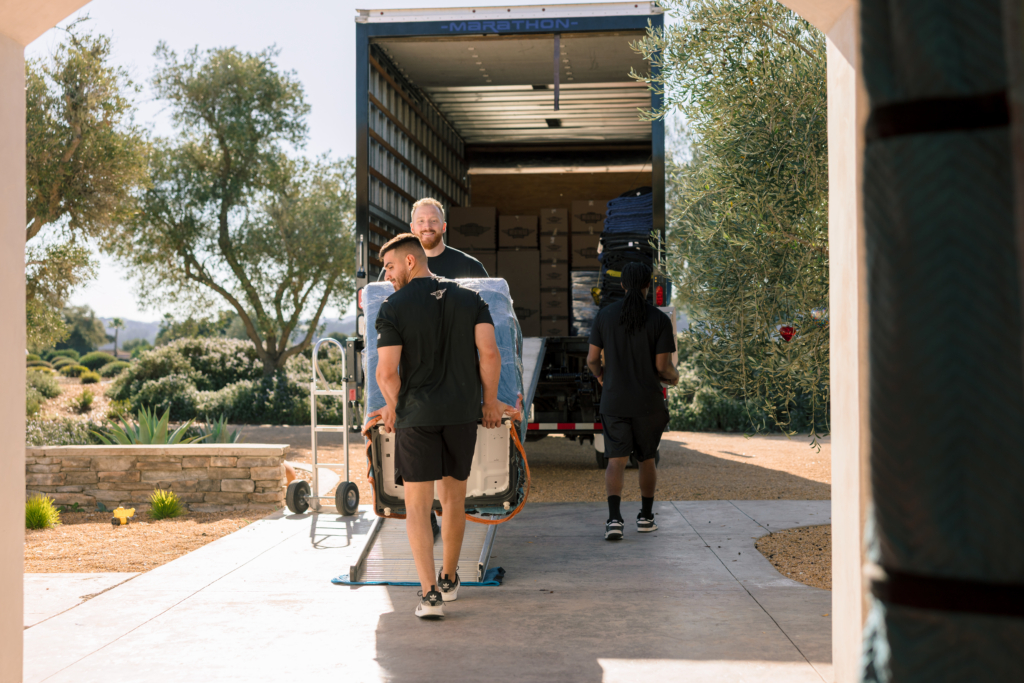
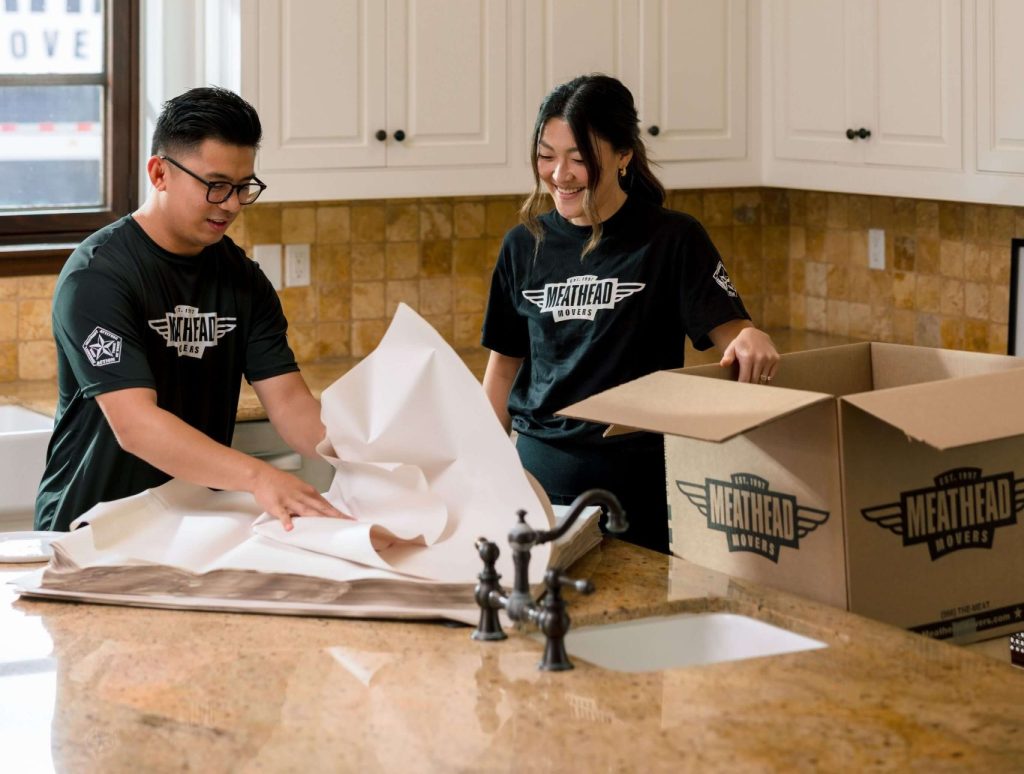
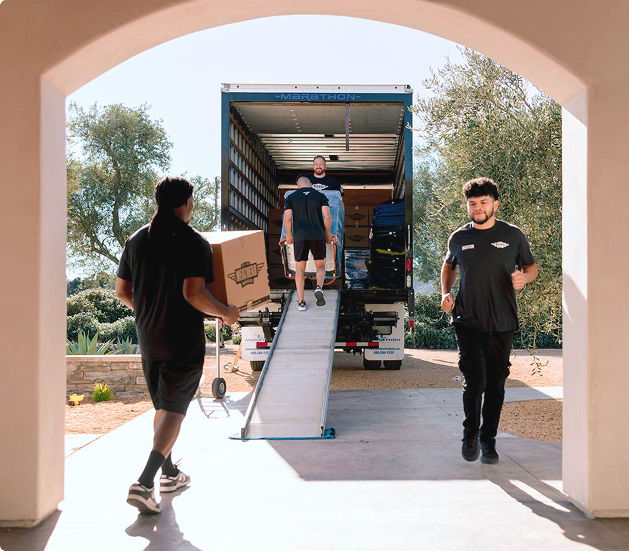
Team Meathead is made up of athletes driven by hustle, heart, and integrity. Our Lake Forest team has been proudly serving Orange County from day one, providing best-in-class moving, packing, and storage services for local families and businesses. Every job is powered by good energy — from transparent pricing to real-time communication and our white-glove standard of care — because this community isn’t just where we work, it’s home.
Honest athletes
Professional, background-checked, and trained with heart, so you can trust who is in your home, handling your belongings.
More hustle, less hassle
We move fast, smart, and jog when our hands aren’t full—often finishing sooner and costing less than slower crews.
Tech-forward moves
We use advanced tools to keep your move efficient and transparent, letting you track your moving truck and belongings throughout the entire process.
Performance that pays off
Our movers are rated on every job and earn bonuses for exceptional service and not damaging your items. That means you get a highly motivated team of focused and incentivized athletes working to make your move as easy as possible.


Community champions
We’re not just in the community; we’re part of it. We show up for local causes, support our neighbors, and move victims of domestic violence to safety at no cost. We’re there when it matters most.
Greatness guaranteed
If something falls short, we make it right with our fair refund assurance program. No runaround, just accountability.
Why Do Lake Forest Residents Choose Meathead Movers?
Meathead Movers began in 1997 and is now the largest independent moving company in California. Our Anaheim branch serves Lake Forest and the Saddleback Valley, and our crews know the weight-restricted streets, hillside HOAs, and three-story townhomes. Every Lake Forest booking comes with:

- Athlete Movers: Background-checked, drug-tested, and professionally trained movers who jog between loads
- The same crew all day: The crew that loads your home is the crew that unloads it.
- Clear estimates: Upfront pricing with no hidden fees
- Fair Refund Assurance: Every move is backed by our Fair Refund Assurance.
- 29,000+ reviews: More than 29,000 customer reviews across our California locations
- A+ BBB rating: An A+ rating from the Better Business Bureau
- Fully licensed: CAL T-189849, USDOT #921143, and MC-398077
- Payment plans: Affirm financing for qualifying customers
Lake Forest Leadership
Local Team Snapshot
Meet the management team leading your Lake Forest move.

Brett Halfar
General Manager
Brett Halfar serves as the Orange County Operations Manager for Meathead Movers. Originally from Oxnard, California, Brett moved to Orange County to take on…
Services in Lake Forest

Which Lake Forest Neighborhoods Do We Serve?
Our crews cover Lake Forest from the I-5 corridor up into the foothills. The city sits in the Saddleback Valley with Irvine to the west and northwest, Laguna Hills and Laguna Woods across I-5 to the southwest, Mission Viejo to the south, and Rancho Santa Margarita, Trabuco Canyon, and the Cleveland National Forest foothills to the east. Whiting Ranch Wilderness Park forms the northeast edge.
Which ZIP Codes Cover Lake Forest?
Lake Forest has two main ZIP codes, split roughly by SR-241. We cover both, along with the city’s PO Box ZIP:
- 92630: The original El Toro area and central Lake Forest, west of SR-241
- 92610: Foothill Ranch and Portola Hills
- 92609: A mail-only ZIP, so we schedule by street address
Which Lake Forest Neighborhoods Do Our Crews Know Best?
Lake Forest has no official neighborhood map, but residents use these names, and our crews work in each area:
- Original El Toro: The older neighborhoods around El Toro Road and Trabuco Road
- The Lake neighborhoods: Homes around the two private lakes and their beach and tennis clubs, off Lake Forest Drive and Ridge Route Drive
- Serrano Creek corridor: Neighborhoods around Lake Forest Park and Serrano Creek
- New tracts: Baker Ranch, Portola Center, and Serrano Summit
- Foothill Ranch: A 1990s master-planned area with the Foothill Ranch Towne Centre and business park
- Portola Hills: Hillside homes at the northeast edge of the city
Do You Move Into Gated and HOA Communities in Lake Forest?
Yes. HOAs govern nearly every post-1980 tract in Lake Forest, the Lake neighborhoods have private club associations, and several Portola Hills and Foothill Ranch enclaves are gated. We check each community’s move rules at booking and clear our crew and truck with the gate or HOA in advance.
What Areas Near Lake Forest Do We Serve?
Lake Forest moves often end in the next city over. These are the nearby areas we cover:
- South and east: Mission Viejo, Rancho Santa Margarita, and Trabuco Canyon
- Across I-5: Laguna Hills, Laguna Woods, and Aliso Viejo
- West: Irvine
Which Meathead Movers Pages Cover Areas Near Lake Forest?
These Meathead Movers pages cover Foothill Ranch and the cities bordering Lake Forest:
What Should You Know About Lake Forest Roads and Parking?
Lake Forest’s truck rules are clearly written, and they’re strict. Big trucks can’t park on public streets except while working, and a list of residential collectors is closed to heavy vehicles. Since local moves are hourly, the route and the curb get planned well before moving day.
Which Roads Do Our Drivers Use Most?
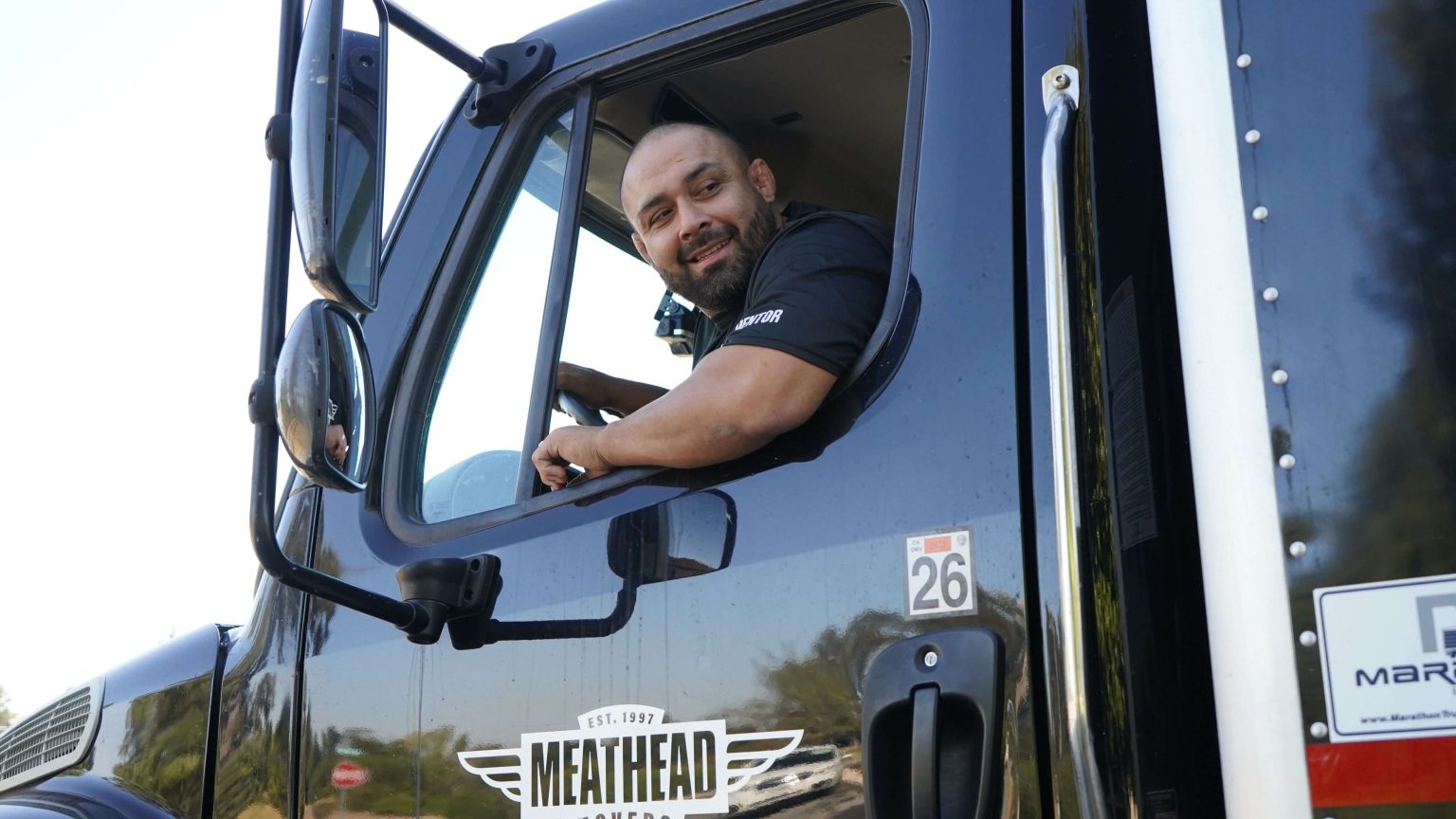
One interstate, one toll road, and a set of long parkways carry most Lake Forest moves. Our drivers use these Lake Forest roads most:
- I-5: Runs along the western city limit, with interchanges at Lake Forest Drive, El Toro Road, and Bake Parkway
- The El Toro Y: The I-5 and I-405 merge just northwest of the city
- SR-241 (Foothill toll road): Crosses Foothill Ranch and Portola Hills on the east side
- Main arterials: El Toro Road, Lake Forest Drive, Bake Parkway, Alton Parkway, Portola Parkway, Trabuco Road, Rockfield Boulevard, Ridge Route Drive, Los Alisos Boulevard, Glenn Ranch Road, Santa Margarita Parkway, and Foothill Ranch Road
Lake Forest workers average a 25.5-minute commute. The El Toro Road and Lake Forest Drive interchanges and the El Toro Y back up in both rush hours, so we time drive legs around them when we can.
Can a Moving Truck Park on a Lake Forest Street?
Only while the crew is working. Lake Forest Municipal Code 12.16.070 bars stopping or parking on any public street for vehicles over 22 feet long, over 90 inches wide, or with more than two axles, and for commercial vehicles over 7 feet tall or 10,000 pounds. Every standard box truck falls in that group. Section 12.16.070(B) makes an exception for vehicles delivering to the adjacent property or temporarily parked while actually loading or unloading. On moving day, that means:
- No parking during breaks: The truck must leave the street when the crew isn’t actively loading, including overnight on a multi-day job.
- 72-hour limit: No vehicle can stay on a street more than 72 hours, and it must move at least 100 feet to reset the clock (LFMC 12.16.040(B)).
- Trailers: A detached trailer can sit on the street only for loading or unloading, and no more than two hours (LFMC 12.16.040(G)).
- Permit parking areas: Some neighborhoods have permit-only parking under LFMC 12.16.080.
Which Lake Forest Streets Have Truck Limits?
Lake Forest Municipal Code 12.26.030 closes 11 streets to vehicles over 14,000 pounds, and a loaded 26-foot truck is often over that limit. Section 12.26.020 lets commercial vehicles use them only by direct route from an unrestricted street to make a pickup or delivery on that street. These are the Lake Forest weight-restricted streets our drivers plan around:
- Toledo Way: Bake Parkway to Lake Forest Drive
- Serrano Road: Toledo Way to El Toro Road
- Jeronimo Road: Bake Parkway to Lake Forest Drive
- Muirlands Boulevard: North city limit to Lake Forest Drive
- Canada Road: Dimension Drive to Lake Forest Drive
- Pittsford Drive: Northcrest Drive to Lake Forest Drive
- Osterman Road: Pittsford Drive to Regency Lane
- Normandale Drive: El Toro Road to Osterman Road
- Other streets: Regency Lane, Aliso Park Drive, and Northcrest Drive
What Makes Hillside and New-Tract Streets Different?
The newest and highest parts of Lake Forest are the hardest to stage. Each area brings its own staging issues:
- Portola Hills and Foothill Ranch: Hillside streets and steeper driveways, some behind gates
- Baker Ranch and Portola Center: Narrow private streets and alley-loaded garages where a full-size truck may not fit
- Lake neighborhoods: Curving residential streets, several of them on the weight-restricted list
What Kinds of Homes Do We Move in Lake Forest?
Lake Forest is mostly single-family and townhome living. About 53% of homes are detached houses, 19% are townhomes or attached condos, about 19% are in buildings with five or more units, and 3.7% are mobile homes. Most were built in the 1970s and 1980s, with another 17% from the 1990s and about 13% added since 2010. About 70% of households own, and households average 2.81 people.
What Should You Expect in an Original Lake Forest Home?
The original El Toro and Lake neighborhoods are mostly 1970s and 1980s one- and two-story tract homes. Many sit in private-lake or community-club HOAs, with attached garages and short driveways on curving streets. A typical job in these homes involves:
- Two-story layouts: Bedrooms upstairs and interior stairs for the heavy pieces
- Full garages: Tools, sports gear, and holiday storage
- Backyards: Patio furniture, play sets, and grills
- HOA rules: Move-hour limits and parking rules set by the association
What About Foothill Ranch and Portola Hills?
Foothill Ranch and Portola Hills are 1990s HOA tracts on hillside streets. Steeper driveways and gated entries add time, and the homes tend to be larger, with four-bedroom floor plans common. We check the gate procedures and assess the driveway grade before quoting.
What About Baker Ranch and the Newer Tracts?
Baker Ranch, Portola Center, and Serrano Summit have 2010s and 2020s three-story townhomes and small-lot homes. Newer Lake Forest homes bring:
- Three floors of stairs: Living areas on the second floor and bedrooms on the third
- Narrow private streets: Streets too tight for a full-size truck in some spots
- Alley-loaded garages: Garages that open onto tight motor courts
- New-home protection: Fresh floors and paint that need full runners and corner guards
What About Condos, Apartments, and Mobile Homes?
The 1970s and 1980s condo and townhome clusters off Lake Forest Drive, Ridge Route Drive, and Muirlands Boulevard have shared lots and exterior stairs. Most apartments are garden-style, with a few newer podium buildings near Bake Parkway that require elevator reservations and COIs. About 1,179 mobile homes round out the housing, and park lanes and check-in rules vary.
Which Items Do We Plan For Most in Lake Forest?
Family-sized Lake Forest homes often hold:
- Four-bedroom family inventories
- Garage contents and workbenches
- Home gym equipment
- Pianos
- Outdoor furniture and grills
Heavy or high-value pieces can be covered under Packing or Valuation, which you can add when you book.
Do We Handle Commercial Moves in Lake Forest?
Yes. Lake Forest is a corporate-campus and light-industrial city, with headquarters, R&D, and manufacturing along Bake Parkway, Alton Parkway, and Commercentre Drive and in the Foothill Ranch business park. Commercial moves here are often office and cubicle moves, lab and equipment moves, and tenant turnovers.
Which Major Employers Are Based in Lake Forest?
Lake Forest’s top employers, from the City’s 2024-25 Annual Comprehensive Financial Report:
- Oakley Inc.: 1,400 employees
- Bal Seal Engineering: 500 employees
- Cox Communications: 488 employees
- AVEVA: 411 employees
- Kawasaki Motors Corp., U.S.A.: 400 employees
- Walmart: 340 employees
- Alcon Research: 300 employees
- Home Depot: 225 employees
- Dynacast: 180 employees
- U.S. Real Estate Services: 48 employees
Where Are Lake Forest's Business Districts?
Lake Forest’s commercial jobs fall in four main areas:
- Bake Parkway and Alton Parkway: Office, R&D, and light-industrial buildings around Commercentre Drive
- Foothill Ranch business park: Corporate campuses, including Oakley’s headquarters, plus tilt-up and flex buildings
- Manufacturing and lab space: Sites for companies like Bal Seal, Kawasaki, Alcon, and Dynacast, with dock-high and grade-level doors
- El Toro Road and Lake Forest Drive: Neighborhood retail and medical offices
Public-agency work for the City and Saddleback Valley Unified goes through formal procurement.
How Do School Calendars Shape Lake Forest Moves?
Most of Lake Forest is in Saddleback Valley Unified School District, which starts and ends later than most Orange County districts. That pushes the Lake Forest family moving window into mid-June. SVUSD’s 2026-27 dates:
- Thanksgiving break: November 23 to 27, 2026
- Winter recess: December 21, 2026, through January 1, 2027
- February recess: February 15 to 19, 2027, including Presidents’ Days
- Spring recess: April 5 to 9, 2027
- Last day: Thursday, June 10, 2027
That gives Lake Forest families from about June 11 until SVUSD’s 2027-28 start in mid-August to move between school years. The February recess week is a useful midyear window. El Toro High School sits at Toledo Way and Ridge Route Drive, so we avoid its bell times on those streets. Homes near the city limits may fall in a different district, so check yours by address.
Do College Schedules Affect Lake Forest Moves?
Only a little. Lake Forest has no college campus, and student moves here are small off-campus moves. Saddleback College in Mission Viejo and Irvine Valley College start spring classes on January 19, 2027. UC Irvine’s spring quarter ends June 11, 2027, so June brings a few more small rental moves.
When Is the Best Time to Move in Lake Forest?
Midweek, midmonth mornings outside mid-June through mid-August are the simplest Lake Forest dates to book. Lake Forest is inland and runs hotter and drier than the coast, especially in the foothills. The National Weather Service covers the city in its Orange County Inland zone and is the official source for heat and red flag warnings.
When Is Moving Season Busiest in Lake Forest?
Lake Forest’s busy season runs later than most of Orange County. These Lake Forest dates fill early:
- Peak months: June 11 through mid-August, keyed to SVUSD’s June 10 last day and mid-August start
- School breaks: Thanksgiving week, the two-week winter recess, and the February 15 to 19 recess week
- Month-end: Moderate, since about 30% of households rent
- August 1: Some late-summer lease changes follow the state rent cap’s annual reset.
How Far Ahead Should I Book a Lake Forest Move?
Lake Forest moves generally require 3 to 4 weeks’ notice. Busier dates and gated communities need more:
- Standard moves: 3 to 4 weeks
- Mid-June through mid-August: 6 to 8 weeks
- Gated hillside communities: 6 to 8 weeks, since gate and HOA approvals take time
- Easiest dates: Tuesday through Thursday, mid-month
How Does Lake Forest Weather Affect a Move?
Weather in Lake Forest changes with elevation. We adjust for:
- Summer heat: Foothill Ranch and Portola Hills heat up on summer afternoons, so we schedule hillside jobs early and load heat-sensitive items last.
- Santa Ana winds: Fall wind events bring hot, dry air, so we secure loose items and watch red flag warnings.
- Rainy season: From November through March, rain makes Portola Hills’ steep driveways slick, so we add floor protection and slow the carry.
Do Wildfires Affect Lake Forest Moves?
They can. Foothill Ranch and Portola Hills border Whiting Ranch Wilderness Park and the Santa Ana Mountains foothills. For homes near those edges, we check CAL FIRE fire hazard severity maps and NWS red flag warnings before moving day.
Does Lake Forest Have Rent Control?
The state Tenant Protection Act (AB 1482) governs covered rentals. In Orange County, the cap is 8.7% for increases from August 1, 2026, through July 31, 2027. Units with a certificate of occupancy issued within the last 15 years are exempt from the cap, which covers some of the newer Baker Ranch and Portola Center homes. This section is general information, not legal advice.
Which Events and Access Rules Affect Lake Forest Moves?
Lake Forest’s biggest street closure comes on the Fourth of July, and most other City events stay in the parks. Before booking, we check the City’s special-events pages for these Lake Forest events:
- Fourth of July Parade: The City expects nearly 14,000 spectators. The parade starts at 9:30 a.m. at Toledo Way and Ridge Route Drive, in front of El Toro High School, and runs on Toledo Way, Serrano Road, Ridge Route Drive, and Lake Forest Drive. Chairs and blankets can’t go out before July 3, and the City posts a street-closure page for the day. We don’t book jobs on or near the route that morning.
- Snowfest: The City’s winter snow-and-sled event at Pittsford Park fills parking lots on Pittsford Drive and Osterman Road.
- Park events: The spring Bunny Blast at El Toro Park and the summer concert and movie series bring extra traffic around the parks.
What Access Rules Apply Around Lake Forest?
In Lake Forest, these access rules can affect when and where the truck parks:
- Gated enclaves: Gate codes or guard clearance in Portola Hills, Foothill Ranch, and the private-lake HOA areas
- Managed communities: Move reservations and COIs in apartment and condo buildings
- Street parking: Trucks stand on the street only while actively loading (LFMC 12.16.070)
- Weight limits: Direct-route access only on the 11 restricted streets
- Road work: We check Caltrans District 12 for overnight closures on I-5 and SR-241.
How Much Does a Local Move in Lake Forest Cost?
Lake Forest moves are quoted free. The cost depends on crew size, hours, and drive time, and California’s hourly billing rules decide how each is counted:

- MAX 4 tariff: Maximum Rate Tariff 4, now administered by the Bureau of Household Goods and Services, governs local household goods moves in California.
- Annual adjustments: Public Utilities Code Section 5191 requires MAX 4 rates to be adjusted at least once a year, on or right after January 1.
- Double drive time: Your bill covers loading and unloading time, plus twice the actual drive between your old and new homes.
- Warehouse travel: The drive from our warehouse to your first stop, and back afterward, isn’t billable.
- Multiple trips: When a move takes several trips between the same two addresses, double drive time applies to the first trip only.
- Time and forms: Movers must log time to the minute and give you the “Important Notice About Your Move,” plus a Change Order for Services if the job changes.
A move to Mission Viejo, Laguna Hills, or Rancho Santa Margarita is usually about 10 to 20 minutes, and Irvine about 15 to 25 minutes, outside rush hour. Congestion at the El Toro Road interchange or the El Toro Y can stretch that leg, and double drive time doubles it on your bill, so we time the drive around peak hours when your dates allow.
What Adds Hours to a Lake Forest Move?
Lake Forest jobs usually run longer because of:
- The rule that big trucks leave the street during breaks and overnight
- Direct-route access on 14,000-pound streets like Toledo Way, Serrano Road, and Muirlands Boulevard
- Hillside streets and steep driveways in Portola Hills and Foothill Ranch
- Three-story townhomes on narrow private streets in Baker Ranch and Portola Center
- Gate and HOA procedures
- Large four-bedroom inventories
- Traffic at the El Toro Y and the El Toro Road interchange
How Can You Save on a Lake Forest Move?
Keep a Lake Forest move affordable with these steps:
- The Meathead Hustle: Our Athlete Movers jog between loads, so hourly moves finish faster.
- Clear the driveway: Moving cars out of the driveway gives the crew the shortest carry.
- Off-peak dates: Outside summer, midweek dates open up.
- Packing help: Packing a day early leaves the main day for loading and the drive.
- Payment plans: Affirm installments are available to qualifying customers.
What Lake Forest Customers Say
Ask for a free Lake Forest quote online, or call our Anaheim branch at (714) 597-6771. We’ll plan the truck, route, and crew around your street.
Let’s Make Your Move Happen
Wherever you’re headed next, the Lake Forest Meathead team is ready to get you there, with hustle, heart, and total professionalism.