
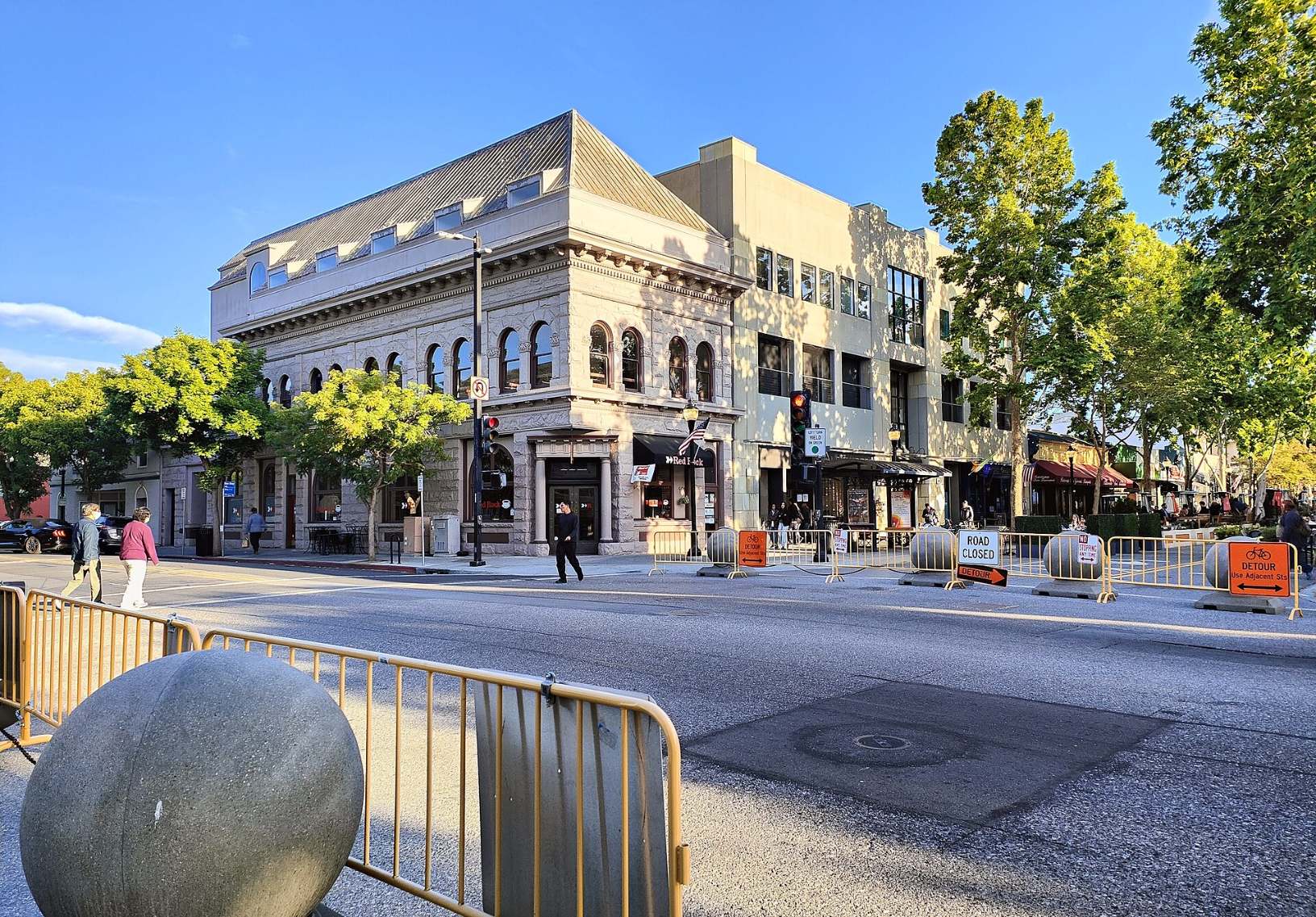
Downtown Los Angeles Movers, From Bunker Hill to the Fashion District
Westlake Village Branch
30721 Russell Ranch Rd, Suite 140
Westlake Village, CA 91362
Call
Hours
Mon–Fri: 8 AM–8 PM
Sat–Sun: 8 AM–6 PM
Meathead Movers handles local moves all over Downtown Los Angeles, from the towers on Bunker Hill to the converted lofts in the Old Bank District and the buildings around the Fashion District and Little Tokyo. Downtown is a neighborhood inside the City of Los Angeles, about 5.8 square miles between the 110 and the LA River. About 65,000 people live in the census tracts that make it up, and about 9 in 10 households rent. Nearly every home here is in a large building, so a Downtown move is mostly about freight elevators, loading docks, and the limited curb space the City allows trucks to use. Our Athlete Movers serve Downtown from our Westlake Village branch.
Downtown Los Angeles Moves at a Glance
- Service area: All of Downtown, mainly ZIP codes 90013, 90014, 90015, 90021, 90071, and 90079, plus the Downtown parts of 90012 and 90017
- Typical move: A studio or one-bedroom apartment in a building with 50 or more units
- Building type: About 84% of homes are in buildings with 50 or more units
- Truck access: Building loading docks first; street loading only where City signs allow
- Busiest stretch: The last and first days of every month, plus June through August
- Events to watch: Crypto.com Arena, L.A. Live, and Convention Center events
- Lead time: 1 to 2 weeks for a flexible midmonth move, 2 to 4 weeks when the building needs an elevator booking and certificate of insurance
- Pricing: Hourly under California’s MAX 4 tariff, starting with a free quote
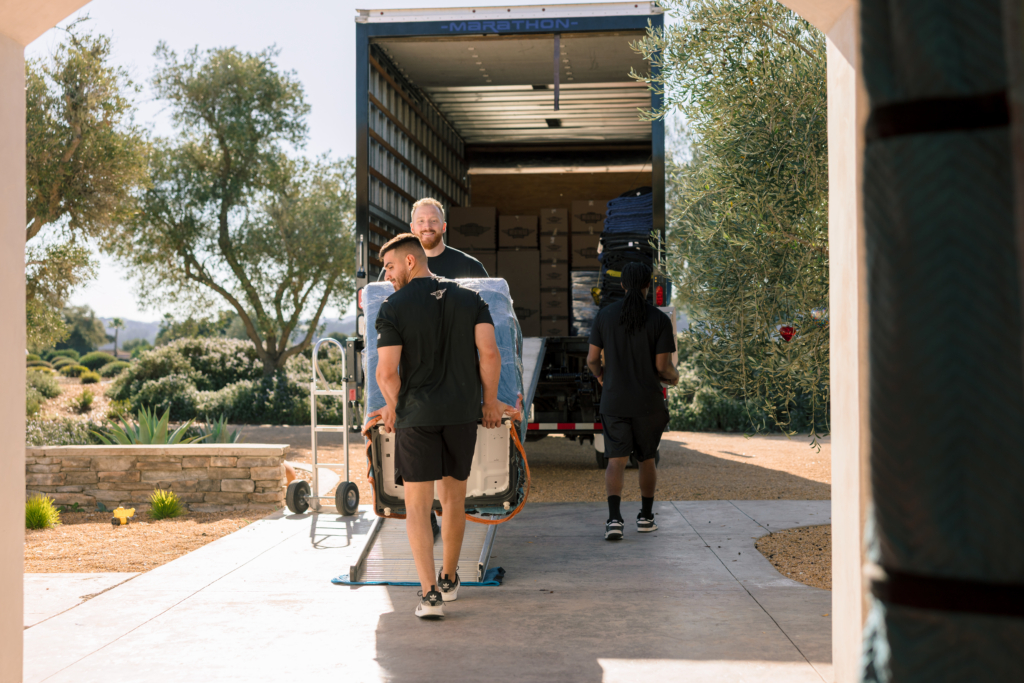
The Meathead Difference
Why Choose Meathead Movers Downtown Los Angeles
Team Meathead is made up of athletes driven by hustle, heart, and integrity. Our Downtown Los Angeles team has been proudly serving Downtown Los Angeles from day one, providing best-in-class moving, packing, and storage services for local families and businesses. Every job is powered by good energy — from transparent pricing to real-time communication and our white-glove standard of care — because this community isn’t just where we work, it’s home.
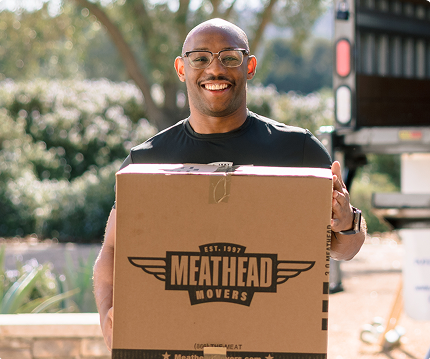
Honest athletes
Professional, background-checked, and trained with heart, so you can trust who is in your home, handling your belongings.
More hustle, less hassle
We move fast, smart, and jog when our hands aren’t full—often finishing sooner and costing less than slower crews.
Tech-forward moves
We use advanced tools to keep your move efficient and transparent, letting you track your moving truck and belongings throughout the entire process.
Performance that pays off
Our movers are rated on every job and earn bonuses for exceptional service and not damaging your items. That means you get a highly motivated team of focused and incentivized athletes working to make your move as easy as possible.
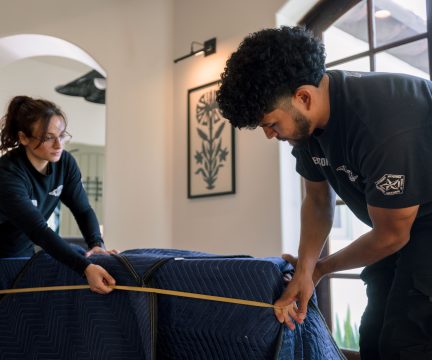

Community champions
We’re not just in the community; we’re part of it. We show up for local causes, support our neighbors, and move victims of domestic violence to safety at no cost. We’re there when it matters most.
Greatness guaranteed
If something falls short, we make it right with our fair refund assurance program. No runaround, just accountability.
Why Do Downtown Los Angeles Residents Choose Meathead Movers?
Meathead Movers started in 1997 as a small California company and has grown into the largest independent moving company in California. Our Westlake Village branch serves Downtown and the surrounding parts of Los Angeles, and our crews know the loading docks, freight elevators, and curb rules that shape moves here. Every Downtown move comes with:
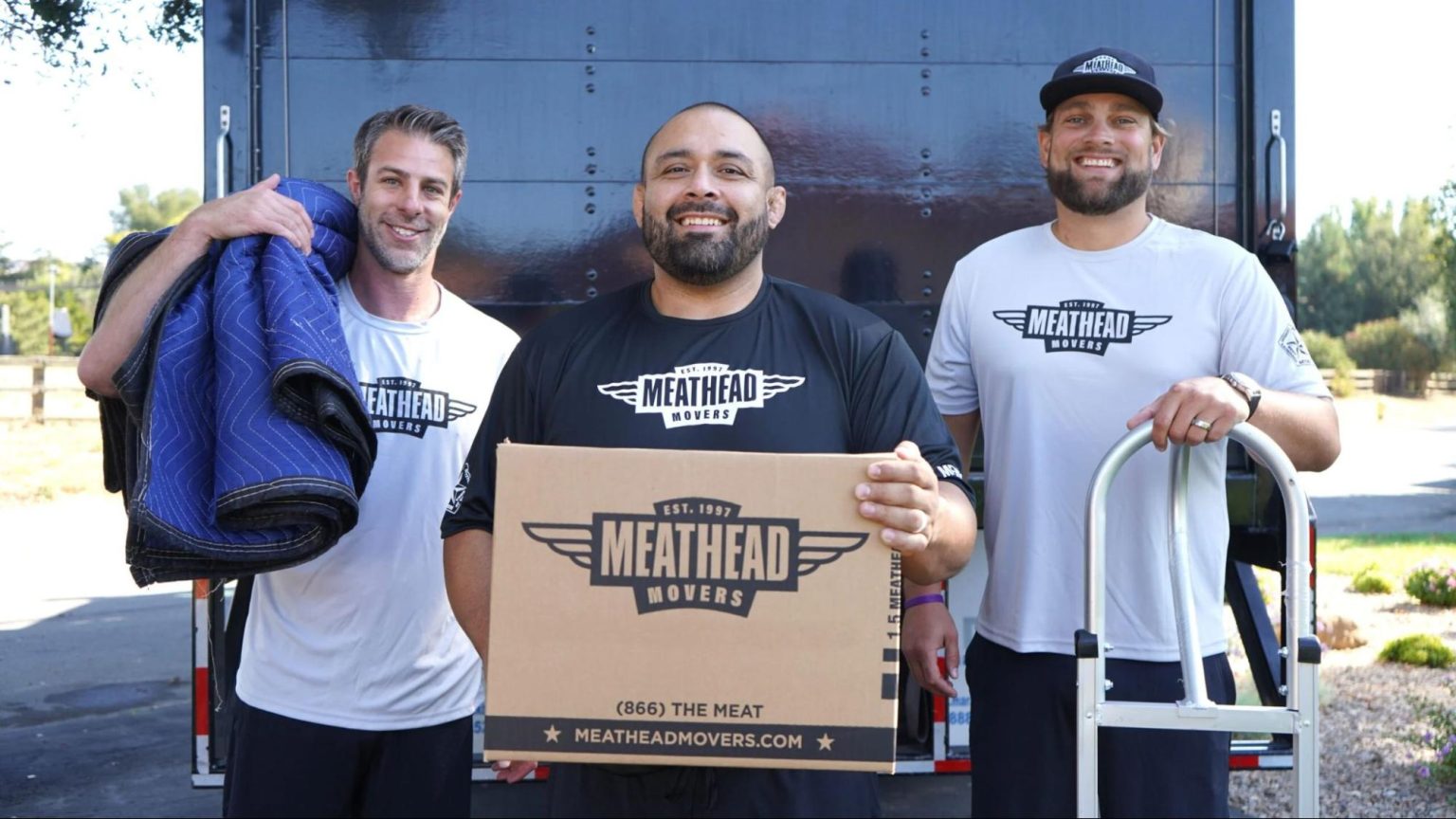
- Athlete Movers: Background-checked, drug-tested, and professionally trained crews who jog between loads
- The same crew all day: The team that loads your home unloads it at the new one
- Clear estimates: Upfront pricing with no hidden fees
- Fair Refund Assurance: Every move is backed by our Fair Refund Assurance.
- 29,000+ reviews: More than 29,000 customer reviews across our California locations
- A+ BBB rating: An A+ rating from the Better Business Bureau
- Fully licensed: CAL T-189849, USDOT #921143, and MC-398077
- Payment plans: Affirm financing for qualifying customers
Downtown Los Angeles Leadership
Local Team Snapshot
Meet the management team leading your Downtown Los Angeles move.
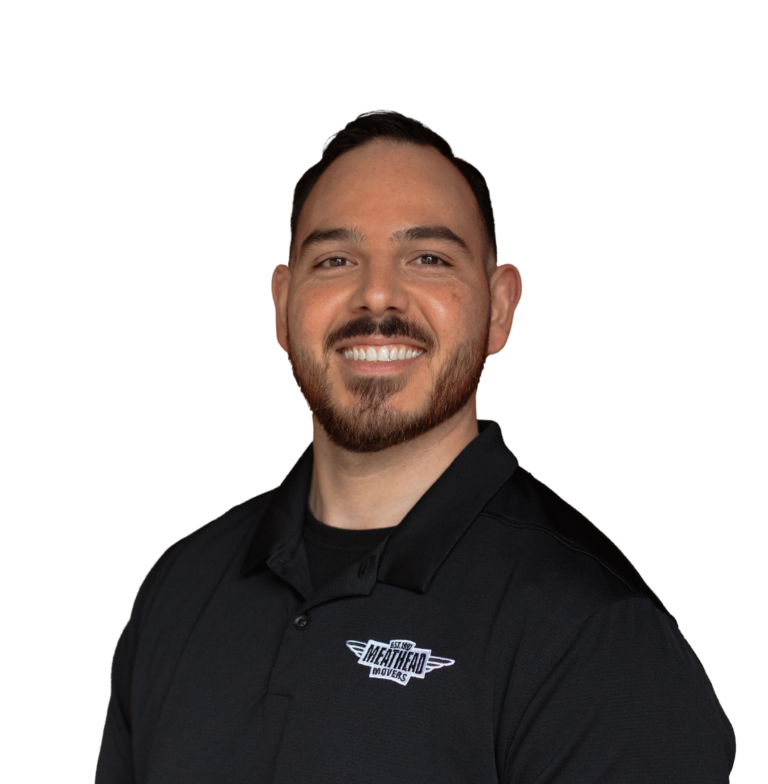
Fernando Gonzalez
Ventura County Operations Manager
Fernando came to Meathead Movers to work hard, and his goal was to move up within the organization and eventually become an Operations Manager. In his free…

Aaron Stanton
Ventura County General Manager
Aaron Stanton is the Territory Sales Manager for Ventura County. Originally from Moorpark, California, Aaron has an impressive background in sports and…
Services in Downtown Los Angeles
Which Downtown Los Angeles Neighborhoods Do We Serve?
We serve all of Downtown. It’s part of the City of Los Angeles, so City rules apply here, including the Los Angeles Municipal Code (LAMC), LADOT parking rules, and LAUSD schools. We use the LA Times Mapping L.A. boundaries, which run roughly along the Harbor Freeway on the west, the 101 and the Chinatown edge on the north, the Los Angeles River on the east, and Washington Boulevard and the industrial blocks near Alameda Street on the south. Chinatown, Echo Park, Westlake, Pico-Union, University Park, Boyle Heights, and Lincoln Heights sit just outside.
Which ZIP Codes Cover Downtown Los Angeles?
Downtown is split across several ZIP codes, and two of them reach well past the neighborhood. These are the Downtown ZIP codes our crews cover:
- 90013, 90014, 90015, 90021, 90071, and 90079: Centered inside Downtown
- 90012 and 90017: Edge ZIP codes shared with neighboring areas, including the Civic Center and Little Tokyo side of 90012
Because ZIP lines don’t follow the neighborhood, we book every move by street address.
Which Parts of Downtown Do Our Crews Know Best?
Mapping L.A. names several districts inside Downtown, and each one has its own kind of building. Our crews regularly work in these parts of Downtown:
- Bunker Hill: High-rise apartments, condos, and office towers
- Civic Center: Government buildings and offices around Grand Park
- Old Bank District: Converted historic bank and office buildings with loft apartments
- Little Tokyo: Mid-rise apartments, shops, and restaurants on the east side
- Fashion District and Jewelry District: Showrooms and wholesale spaces
- Industrial district: Warehouses and wholesale buildings toward the river
Locals also use names like South Park, the Historic Core, and the Arts District.
Do You Move Into Downtown High-Rises?
Yes, constantly. About 84% of Downtown homes are in buildings with 50 or more units, and about 35% were built since 2010. We send the crew list and truck size ahead of time, book the freight elevator and loading dock, and get the certificate of insurance the building asks for.
What Areas Near Downtown Do We Serve?
Plenty of Downtown moves are short trips to a nearby neighborhood. Our crews also work in these nearby areas:
- North and west: Chinatown, Echo Park, Westlake, and Koreatown
- South: Pico-Union, University Park, and Historic South-Central
- East: Boyle Heights, Lincoln Heights, and East Los Angeles
Which Meathead Movers Pages Cover Areas Near Downtown Los Angeles?
Moving between Downtown Los Angeles and a nearby city? These Meathead Movers pages cover the areas around Downtown Los Angeles:
What Should You Know About Downtown Los Angeles Roads and Parking?
Downtown sits in the middle of LA’s freeway system, but its streets are crowded, many run one way, and legal curb space is hard to find. City rules limit where and when a truck can stop. Local moves bill by the hour, so we plan the dock time, the route in, and a backup curb spot before moving day.

Which Roads Do Our Drivers Use Most?
Freeways wrap around Downtown, and the street grid inside is tight. These are the Downtown roads our drivers rely on most:
- I-110 (Harbor Freeway): Along the west side, north to Pasadena and south toward the South Bay
- US-101: Along the north side, toward Hollywood and East LA
- I-10 (Santa Monica Freeway): Along the south side, west to the Westside and east to the San Gabriel Valley
- North-south streets: Figueroa, Flower, Grand, Hill, Broadway, Spring, Main, Los Angeles, San Pedro, and Alameda
- East-west streets: Temple, Cesar Chavez, the numbered streets from 1st to 9th, Olympic, Pico, and Washington
Only about 41% of Downtown workers drive alone, and about 29% work from home (ACS 2020-2024, census tracts in the Mapping L.A. boundary). About a third of renter households don’t have a car, so many customers need the whole move handled, not just the heavy pieces.
Can a Moving Truck Park on a Downtown Street?
Sometimes, and only where signs allow. LAMC Section 80.69.2 makes it unlawful for a business to park a commercial vehicle, or any vehicle longer than 22 feet, on a block where most buildings are homes, and it limits commercial vehicles to three hours on other streets. Both limits make an exception while the vehicle is loading or unloading property and more time is reasonably needed. These are the City of LA rules we plan around:
- Anti-gridlock lanes: On signed major streets, stopping in the curb lane is banned during weekday rush periods (LAMC 80.70), so we never load there at peak times.
- Loading zones: Commercial loading in a loading zone is limited to the time needed, up to 30 minutes (LAMC 80.60).
- Alleys: Vehicles can stop in an alley only to load or unload (LAMC 80.61).
- Oversize vehicles: On signed streets, vehicles over 22 feet long or over 84 inches tall can’t park from 2 to 6 a.m. (LAMC 80.69.4).
- 72-hour limit: No vehicle can stay on a City street for 72 hours or more (LAMC 80.73.2).
Can You Reserve Curb Space for Moving Day?
Not on your own. LAMC Section 80.73.3 says no one but the City can reserve a street parking space. In most Downtown buildings, the loading dock is the better plan.
What About Downtown Garages and Loading Docks?
Many newer Downtown towers have a loading dock or a garage entrance for move-ins, but clearance can be too low for a full-size moving truck. In that case we park at a legal curb spot and bring everything in through the lobby or a side entrance. We ask the building for dock height, dock hours, and elevator size when we book.
What Kinds of Homes Do We Move in Downtown Los Angeles?
Downtown is almost entirely large buildings. In the census tracts that make up the neighborhood, about 84% of homes are in buildings with 50 or more units and another 9% are in buildings with 20 to 49 units. Only about 2% are single-family houses. About 90% of households rent, and households average just 1.53 people (ACS 2020-2024).
What Should You Expect in a New Downtown Tower?
About 35% of Downtown homes were built in 2010 or later. These buildings usually come with a set of move rules:
- Elevator reservations: A booked window on the freight or service elevator, with pads installed
- Certificate of insurance: A COI naming the building owner or management company
- Dock schedules: Assigned dock times, height limits, and staff check-in
- Move fees and deposits: Charged by some buildings for move-ins and move-outs
What About Downtown's Historic Lofts and Conversions?
About 29% of Downtown homes are in buildings from before 1940, many of them old office and bank buildings turned into lofts. These buildings bring different challenges:
- Older elevators: Smaller cabs and slower trips
- Long hallways: Long carries from the elevator to the unit
- Open layouts: Large loft furniture, shelving, and art
- Limited loading: Some buildings load from the street or an alley instead of a dock
Do You Handle Small Moves and Studios Downtown?
Yes, every week. About 53% of Downtown homes are studios and another 22% are one-bedrooms. Many jobs are small moves, a move into storage between leases, or a few large pieces. About 14% of homes were vacant at the time of the survey, most of them units for rent, so turnover is steady all year.
Which Items Do We Plan For Most in Downtown Los Angeles?
These items come up often on Downtown jobs:
- Sofas and sectionals that have to fit in the elevator
- Large TVs and home-office setups
- Art, mirrors, and framed pieces
- Platform beds and modular shelving
- Bikes and sports gear stored in the unit
For fragile or valuable pieces, ask about our Packing and Valuation options when you book.
Do We Handle Commercial Moves in Downtown Los Angeles?
Yes. Downtown is a job center first. Mapping L.A. counts about 207,000 people in Downtown during the day, several times the number who live there. Commercial moves here include office suites in high-rises, government and nonprofit offices, showrooms, restaurants, and warehouse space.
Where Are Downtown's Business Districts?
Commercial work Downtown clusters in a few areas. Our commercial crews work in these Downtown business areas:
- Bunker Hill and the Financial District: Office towers with freight elevators and after-hours move windows
- Civic Center: City, County, state, and federal offices and courts
- Fashion District and Jewelry District: Showrooms and wholesale spaces with tight security rules
- Old Bank District and Little Tokyo: Small offices, shops, and restaurants
- Industrial district: Warehouses and wholesale businesses toward the river
- Convention Center and L.A. Live area: Event, hospitality, and office space
Many office buildings only allow moves after business hours or on weekends, and freight elevators are shared with other tenants. We check the building’s rules and book the elevator before the move.
How Do School Calendars Shape Downtown Los Angeles Moves?
Downtown is served by Los Angeles Unified School District (LAUSD), whose headquarters sits at the edge of Downtown on Beaudry Avenue. Families are a small share here, since households average about 1.5 people, so leases matter more than school dates. Families who do move still plan around these LAUSD 2026-27 dates:
- First day of school: Mid-August
- Fall recess: November 23 to 27, 2026
- Winter recess: December 21, 2026, to January 8, 2027
- Spring recess: March 22 to 26, 2027
- Last day of school: June 4, 2027
Do College Schedules Affect Downtown Moves?
Somewhat. There’s no large campus inside Downtown, but students from nearby schools rent studios and shared units here, so turnover picks up in late spring and late summer.
When Is the Best Time to Move in Downtown Los Angeles?
The easiest Downtown moves happen midweek, midmonth, and early in the day, away from big arena and convention events. Downtown is covered by the National Weather Service Los Angeles/Oxnard office, the best source for heat and storm alerts in LA County.
When Is Moving Season Busiest Downtown?
Leases set the rhythm Downtown. These are the dates that fill up first:
- Month-end: The last and first days of every month, since about 90% of households rent
- Summer: June through August
- Event days: Big nights at Crypto.com Arena, L.A. Live, and the Convention Center, when traffic and closures slow everything nearby
How Far Ahead Should I Book a Downtown Move?
Book 1 to 2 weeks ahead for a midmonth move in a building with flexible dock hours. These lead times help:
- Studios and one-bedrooms, midmonth: 1 to 2 weeks
- High-rises with elevator bookings and COIs: 2 to 4 weeks
- Month-end and summer: 3 to 4 weeks
- Office moves: As soon as the building gives you an after-hours window
How Does Downtown Weather Affect a Move?
At the Downtown Los Angeles weather station, average highs run about 68 to 69 degrees in winter and 83 to 85 degrees from July through September, with about 14.8 inches of rain a year (1991-2020 averages). These are the conditions we plan for:
- Late-summer heat: Loading docks and garages get hot, so we start early and keep electronics and medications with you.
- Rainy season: Most rain falls from November through April, so we protect lobby floors and elevator cabs.
- Wet ramps: Garage ramps and dock plates get slick in the rain, so we slow down and use extra runners.
Which Events and Access Rules Affect Downtown Los Angeles Moves?
Downtown hosts major arena, award-show, and convention events, and the Convention Center expansion has closed part of Pico Boulevard. We check LADOT notices and building calendars before every booking and plan around these:
- Award shows and arena events: Games, concerts, and award shows at the arena and L.A. Live often bring closures and heavy traffic on Figueroa, Olympic, and Pico.
- Convention Center construction: The Convention Center expansion has closed part of Pico Boulevard near LA Live Way and Figueroa Street.
- Filming: LADOT posts temporary no-parking signs for film shoots, which can take curb space with little warning.
What Access Rules Apply Downtown?
Building rules matter as much as street rules here. These are the access rules we plan around:
- Residential blocks: Trucks over 22 feet only while loading or unloading (LAMC 80.69.2)
- Rush-hour curb lanes: No stopping in signed anti-gridlock zones (LAMC 80.70)
- No saved spots: Only the City can reserve curb space (LAMC 80.73.3)
- Buildings: Elevator bookings, COIs, dock times, move fees, and garage height limits
- Offices: After-hours move windows and shared freight elevators
How Much Does a Local Move in Downtown Los Angeles Cost?
Every Downtown local move starts with a free quote, and the total depends on crew size, hours on the job, and the drive between homes. California’s billing rules for hourly moves apply to every Downtown job:
- MAX 4 tariff: Maximum Rate Tariff 4, now administered by the Bureau of Household Goods and Services, governs local household goods moves in California.
- Annual adjustments: Public Utilities Code Section 5191 requires MAX 4 rates to be adjusted at least once a year, on or right after January 1.
- Double drive time: Your bill covers loading and unloading time, plus twice the actual drive between your old and new homes.
- Warehouse travel: The drive from our warehouse to your first stop, and back afterward, isn’t billable.
- Multiple trips: When a move takes several trips between the same two addresses, double drive time applies to the first trip only.
- Time and forms: Movers must log time to the minute and give you the “Important Notice About Your Move,” plus a Change Order for Services if the job changes.
Downtown trips are short in miles but can be slow. Map estimates put Koreatown, Echo Park, Boyle Heights, and East LA about 10 to 20 minutes away, Hollywood about 15 to 25 minutes, Pasadena and Glendale about 20 to 30 minutes, and Long Beach or Santa Monica 30 minutes or more. Rush hour on the 110, 101, 10, and 5 can stretch those times a lot, and that drive counts twice on your bill.
What Adds Hours to a Downtown Move?
These Downtown conditions are the most likely to add time to your invoice:
- Elevator waits and shared freight elevators
- Long walks from the dock or curb to the unit
- Low garage clearance that keeps the truck on the street
- Limited legal curb space and anti-gridlock lanes
- One-way streets and event or construction closures
- Building move windows that don’t line up with your schedule
How Can You Save on a Downtown Move?
A few choices can help keep a Downtown move on budget:
- The Meathead Hustle: Our Athlete Movers jog between loads, so hourly jobs finish faster.
- Book the elevator and dock early: A confirmed window keeps the crew from waiting.
- Send us your building’s move rules: COI details and dock height ahead of time prevent delays at check-in.
- Loading/Unloading and On-Site Labor: Lower-cost help if you’re driving your own truck
- Free quotes: Every estimate is free, with no obligation.
What Downtown Los Angeles Customers Say
Ready to plan your Downtown Los Angeles move? Request a free quote online or call our Westlake Village branch at (213) 602-8495, and we’ll match the truck and crew to your building, your dock, and your dates.
Let’s Make Your Move Happen
Wherever you’re headed next, the Downtown Los Angeles Meathead team is ready to get you there, with hustle, heart, and total professionalism.