Mountain House Movers, From Wicklund Village to College Park
Hayward Branch
23510 Bernhardt St
Hayward, CA 94545
Call
Hours
Mon–Fri: 8 AM–9 PM
Sat–Sun: 8 AM–6 PM
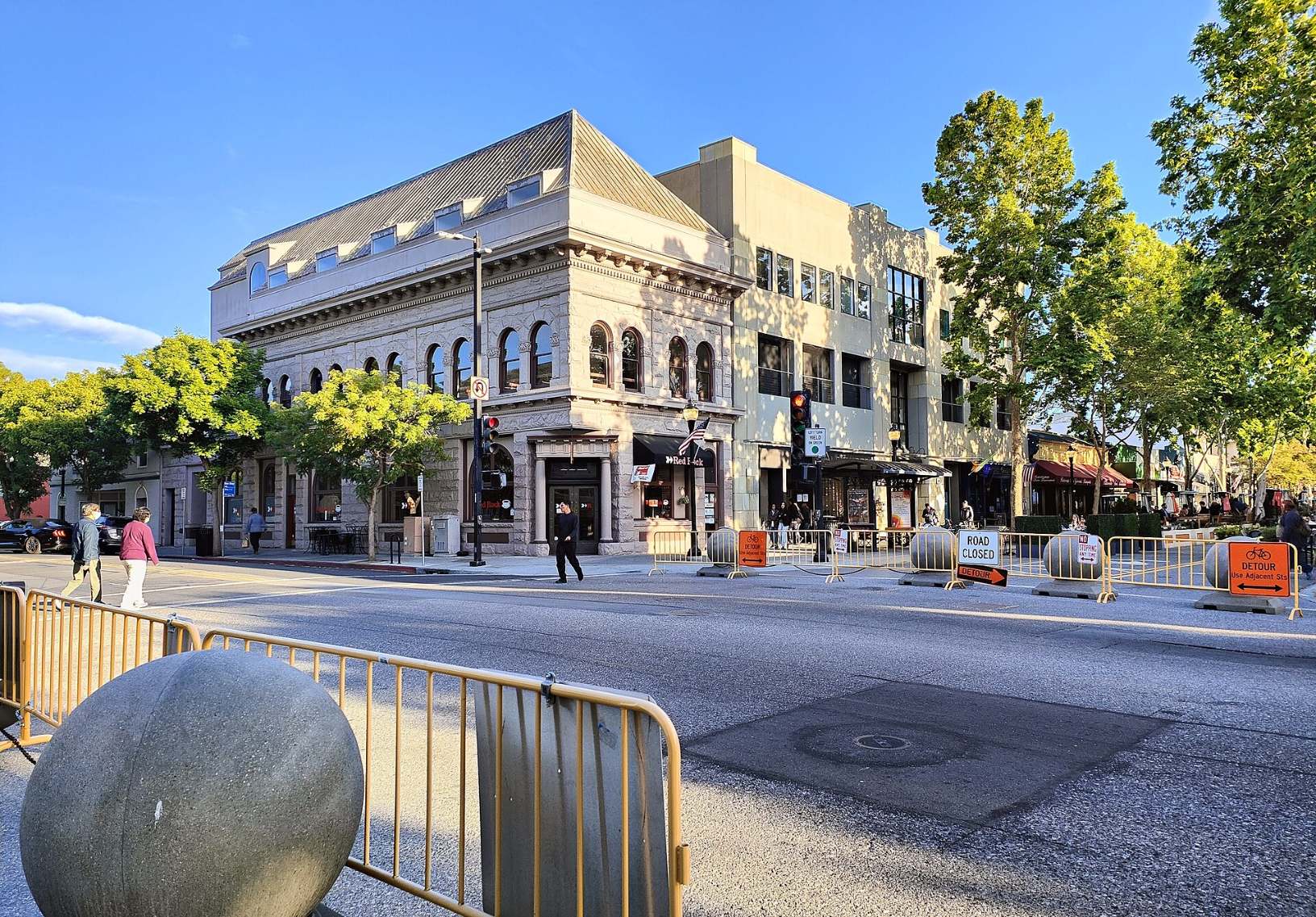
Meathead Movers handles local moves all over Mountain House, from the established streets of Wicklund and Bethany to the newer streets around College Park and the Delta College campus. Mountain House is California’s newest city. It incorporated on July 1, 2024, after two decades as a master-planned community run by a services district. The 2020 Census counted 24,499 people on about 4.6 square miles just north of I-205. Almost everything here was built after 2000, so moves tend to mean big two-story houses, full garages, and households of three or four people or more. The new city also has its own firm rules on where trucks can park. Our Athlete Movers serve Mountain House from our Hayward branch.
Mountain House Moves at a Glance
- Service area: All of Mountain House (ZIP 95391), plus Tracy, Discovery Bay, Byron, Lathrop, and Livermore
- Typical move: A four-bedroom, two-story house; 44.9% of homes have four bedrooms and another 14.7% have five or more
- Household size: 3.61 people per household, so there’s usually a lot to pack
- Truck access: Wide, newer streets, but commercial and oversized vehicles can park on residential streets only while they’re serving a home
- Busiest stretch: May 29 through early August, between the last and first days of Lammersville Unified classes
- Lead time: 2 to 3 weeks for most moves, and 4 to 6 weeks for June, July, and month-end weekends
- Summer heat: July highs average about 94 degrees nearby, so we start summer jobs early
- Pricing: Hourly under California’s MAX 4 tariff, beginning with a free quote
The Meathead Difference
Why Choose Meathead Movers Mountain House
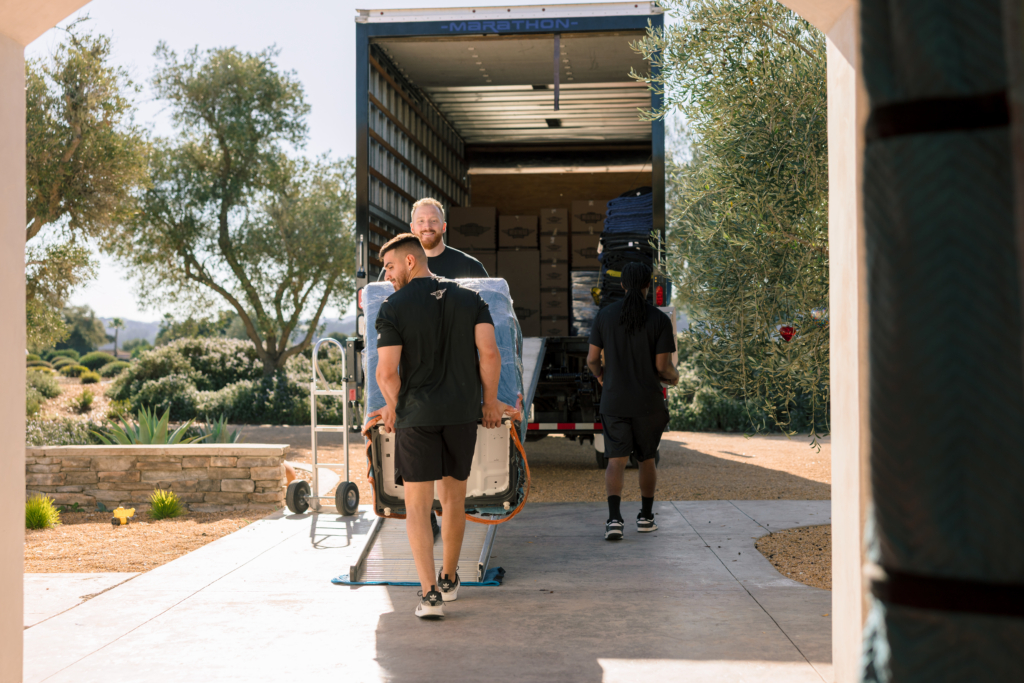
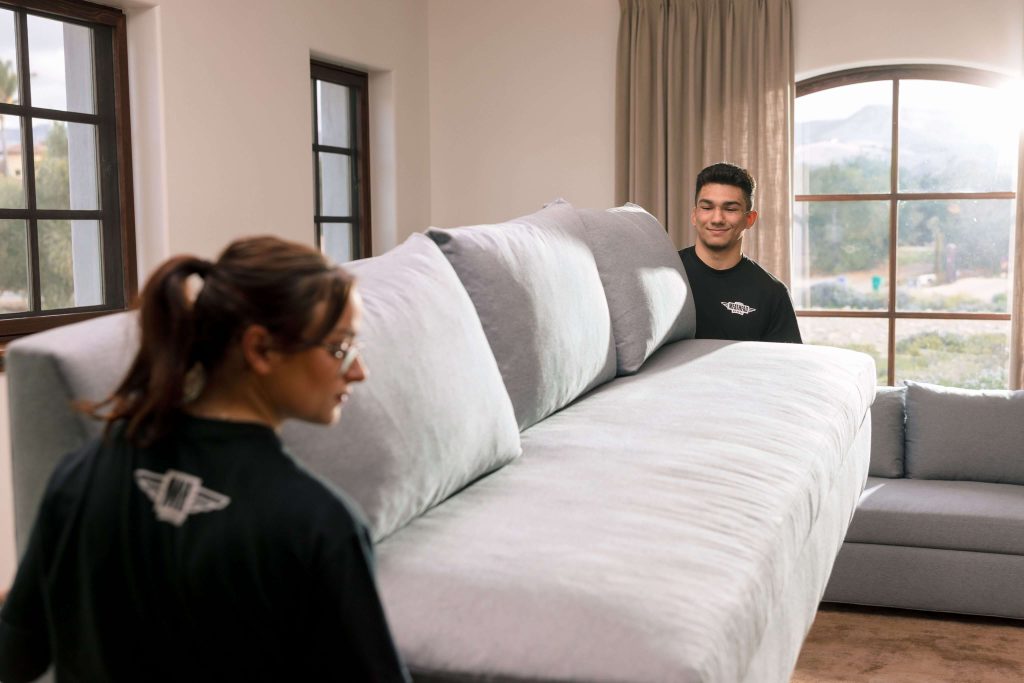
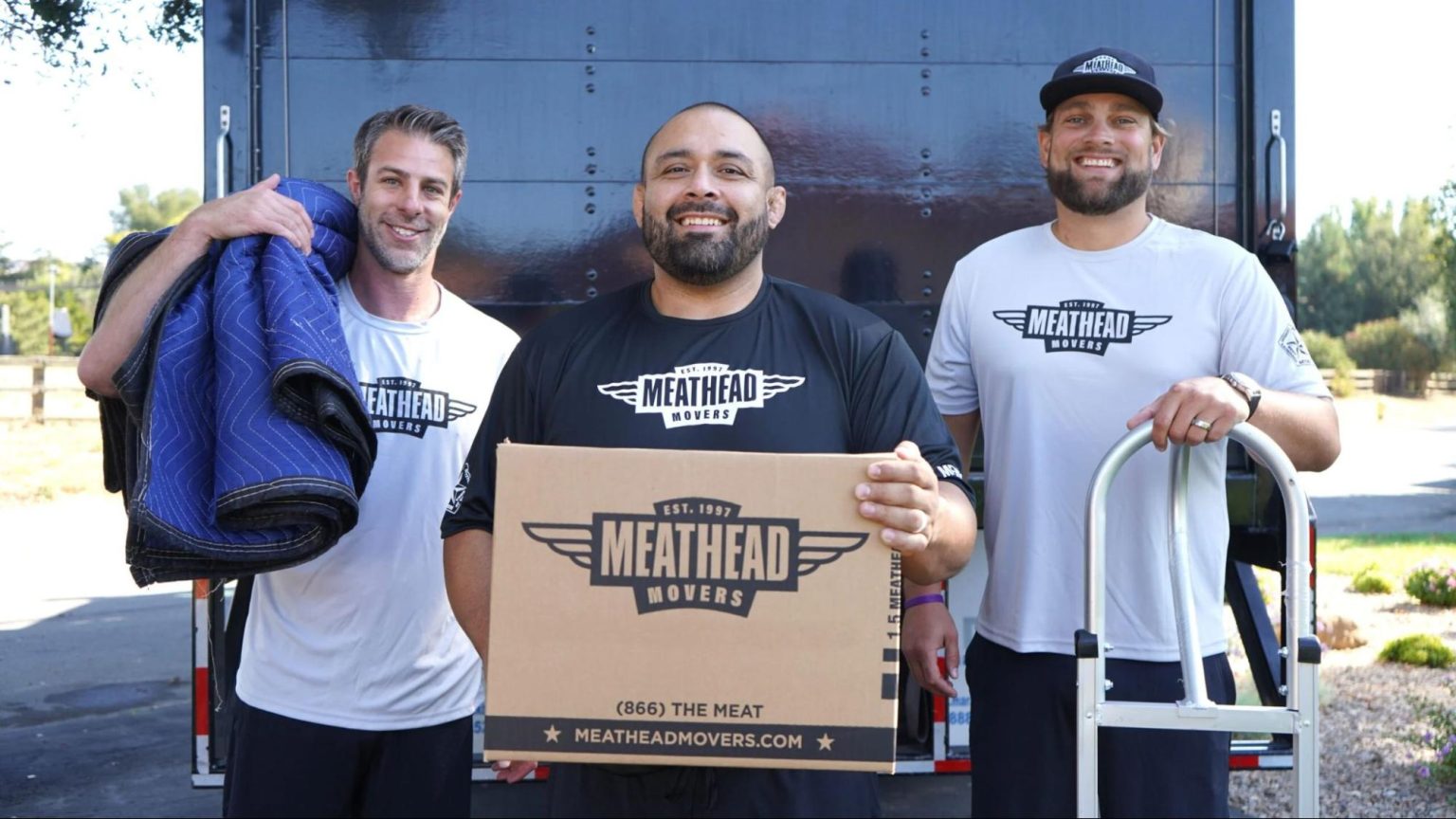
Team Meathead is made up of athletes driven by hustle, heart, and integrity. Our Mountain House team has been proudly serving Mountain House from day one, providing best-in-class moving, packing, and storage services for local families and businesses. Every job is powered by good energy — from transparent pricing to real-time communication and our white-glove standard of care — because this community isn’t just where we work, it’s home.
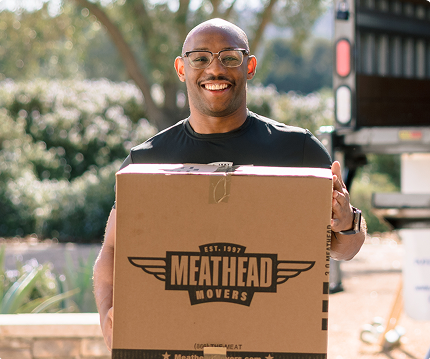
Honest athletes
Professional, background-checked, and trained with heart, so you can trust who is in your home, handling your belongings.
More hustle, less hassle
We move fast, smart, and jog when our hands aren’t full—often finishing sooner and costing less than slower crews.
Tech-forward moves
We use advanced tools to keep your move efficient and transparent, letting you track your moving truck and belongings throughout the entire process.
Performance that pays off
Our movers are rated on every job and earn bonuses for exceptional service and not damaging your items. That means you get a highly motivated team of focused and incentivized athletes working to make your move as easy as possible.


Community champions
We’re not just in the community; we’re part of it. We show up for local causes, support our neighbors, and move victims of domestic violence to safety at no cost. We’re there when it matters most.
Greatness guaranteed
If something falls short, we make it right with our fair refund assurance program. No runaround, just accountability.
Why Do Mountain House Residents Choose Meathead Movers?
Meathead Movers started in California in 1997 and has grown into the largest independent moving company in California. Our Hayward branch serves Mountain House and the surrounding area, from Wicklund and Bethany to the streets near College Park. Every Mountain House move comes with:

- Athlete Movers: Background-checked, drug-tested, and professionally trained movers who jog between loads
- The same crew all day: The crew that loads your home is the crew that unloads it
- Clear estimates: Upfront quotes with no hidden fees
- Fair Refund Assurance: Every move is backed by our Fair Refund Assurance.
- 29,000+ reviews: More than 29,000 customer reviews across our California locations
- A+ BBB rating: An A+ rating with the Better Business Bureau
- Fully licensed: CAL T-189849, USDOT #921143, and MC-398077
- Payment plans: Affirm financing for qualifying customers
Mountain House Leadership
Local Team Snapshot
Meet the management team leading your Mountain House move.

Jordan Watts
Operations Manager
Jordan Watts is the Operations Manager of Meathead Movers’ Hayward branch, a role he earned through years of dedication and hard work within the company…

Rachel Keyes
Territory Sales Manager
Rachel Keyes is the Territory Sales Manager for Meathead Movers’ East Bay branch. Originally from Santa Margarita, California, Rachel attended Atascadero…
Services in Mountain House

Which Mountain House Neighborhoods Do We Serve?
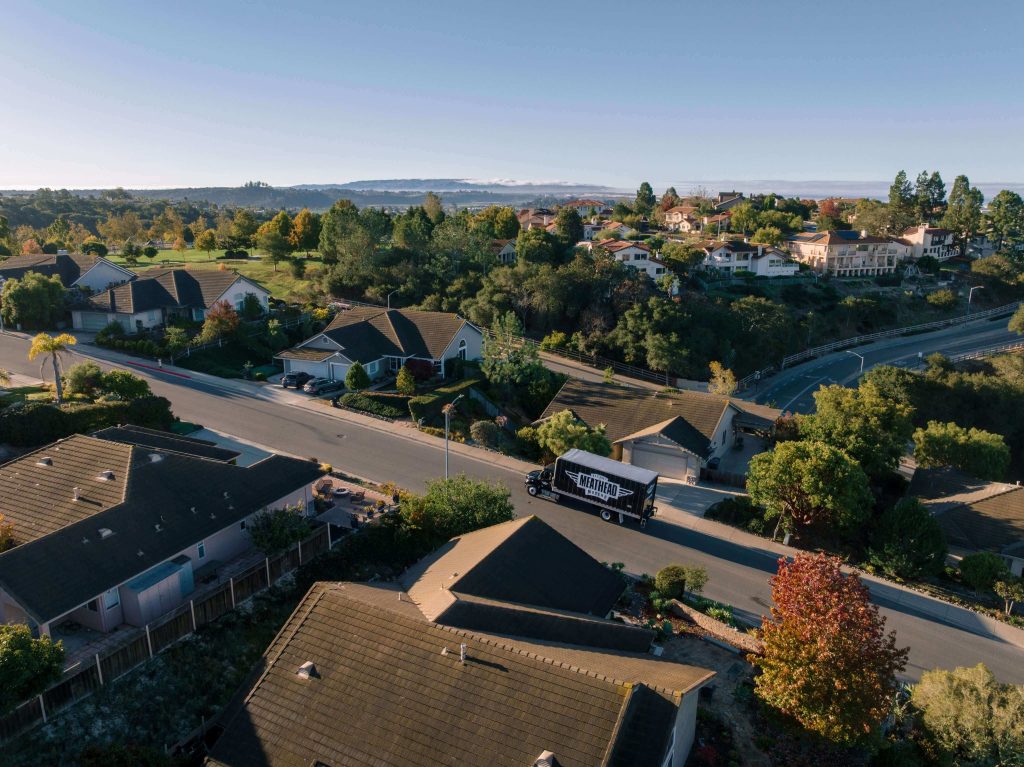
We serve every village in Mountain House. The city sits at the west edge of San Joaquin County, below Altamont Pass, with Tracy to the east and Discovery Bay and Byron to the north. It was planned as a set of villages, and each one has its own K-8 school, park, and street layout. Those village names are how most residents describe where they live, so they’re how we plan routes too.
Which ZIP Code Covers Mountain House?
All of Mountain House uses ZIP code 95391. The ZIP code also takes in farmland around the city, but nearly everyone with a 95391 address lives inside city limits. If your address is out on a rural road instead of a village street, tell us when you book so we can check access and driveway length.
Which Mountain House Villages Do Our Crews Know Best?
The City publishes street plans by village, and those names line up with how locals talk about the city. These are the Mountain House areas our crews work in:
- Wicklund and Bethany: Villages named for the farm towns that once stood here, each with its own park and school
- Altamont and Questa: Villages built around Altamont Park and Questa Park
- Hansen and Cordes: Villages around Hansen Village Park and the two Cordes parks
- Costa: The village around Costa Park
- College Park: The area around the Delta College South Campus on Central Parkway
- Central Mountain House: Main Street, City Hall, Central Community Park, and Mountain House High School
- Mountain House Creek: Homes along the creek park that winds through town
Do Mountain House Homes Have HOA-Style Rules?
Yes. Mountain House homes are covered by the community’s Master Restrictions, which the City’s Code Compliance division enforces. They deal mostly with the outside of homes and how properties are used, not with moving day itself. Some subdivisions may have their own association rules on top of that. If yours does, send us any move-in rules or parking notices when you book.
What Areas Near Mountain House Do We Also Serve?
Plenty of Mountain House moves start or end somewhere nearby, especially for families moving out from the Bay Area or across to Tracy. Our crews also cover these areas:
- Next door: Tracy and the unincorporated farmland around Mountain House
- North: Byron, Discovery Bay, and Brentwood
- East: Lathrop, Manteca, and Stockton
- Over the pass: Livermore, Pleasanton, and Dublin
Which Meathead Movers Pages Cover Areas Near Mountain House?
Moving between Mountain House and a nearby city? These Meathead Movers pages cover the areas around Mountain House:
What Should You Know About Mountain House Roads and Parking?
The streets themselves are easy. They’re new, wide, and laid out for cars. What takes planning is the City’s rules on where large vehicles can park, plus the commute traffic on I-205 and over Altamont Pass.

Which Roads Do Our Drivers Use Most?
Most Mountain House moves use a short list of roads to get in and out of town:
- I-205: Just south of the city, the main route to Tracy, Manteca, and Stockton, and toward I-580
- I-580 over Altamont Pass: The route to Livermore, the Tri-Valley, and the rest of the Bay Area
- Mountain House Parkway: The interchange with I-205, continuing south as International Parkway in Tracy
- Grant Line Road and Byron Road: Regional roads toward Tracy and north toward Byron and Discovery Bay
- Great Valley Parkway, Central Parkway, and Arturo Boulevard: The City’s main internal corridors
Mountain House workers average a 49.6-minute commute, and a big share of that time is spent on I-205 and I-580. Weekday rush hours on those freeways can double a short drive, so we schedule long drive legs for midday when we can.
Can a Moving Truck Park on a Mountain House Street?
Yes, while we’re working at your home. Mountain House adopted its own municipal code after it became a city, and Title 10 has firm rules on commercial and oversized vehicles. These are the ones that matter on moving day:
- Large commercial vehicles: Commercial vehicles rated at 10,000 pounds or more can’t park on any street that isn’t a designated truck route, except while making pickups or deliveries from or to a building (Section 10-2-704).
- Oversized vehicles: Any vehicle taller or wider than 7.5 feet, longer than 22 feet, or rated over 10,000 pounds is an oversized vehicle and can’t park on a street, except while providing services to a nearby property (Section 10-2-509).
- Short-term permits: The City can give a resident a written permit to park an oversized vehicle by their home for up to 24 hours, no more than twice in seven days, for a fee (Section 10-2-509).
- Trailers: Trailers can’t sit on a street off a truck route unless they’re being loaded or unloaded (Section 10-2-705).
- 72-hour limit: No vehicle can stay parked on a street or alley for more than 72 hours in a row (Section 10-2-402).
In practice, our truck can sit at your curb while we load or unload, but it can’t stay overnight. If you’re renting a trailer, a container, or your own large truck to stage the night before, ask the City about a temporary permit first.
What About Mountain House Driveways, Cul-de-Sacs, and School Streets?
Most Mountain House homes are newer production houses on compact lots, so we usually park on the street in front of the house. Cul-de-sacs and curved village streets can make it hard to fit a full-size truck next to the home. Each village also has a K-8 school, and the streets around it back up at morning drop-off and afternoon pickup. We look at your address before moving day and plan to arrive outside bell times when the house is near a school.
What Kinds of Homes Do We Move in Mountain House?
Mountain House is almost all houses. About 83.5% of homes are detached single-family houses and 9.9% are townhomes or other attached homes, and apartment buildings barely show up in the Census numbers (ACS 2020-2024). About 70% of households own their homes. Nearly everything is new: 44.9% of homes were built between 2010 and 2019, 34.5% in the 2000s, and 11.2% since 2020. Households average 3.61 people, so even a starter home here often holds a family’s worth of furniture.
What Should Families in Large Two-Story Homes Plan For?
The biggest Mountain House moves are four- and five-bedroom homes with full garages. Here’s what we plan for:
- Bigger homes: 44.9% of homes have four bedrooms and 14.7% have five or more
- Stairs: Most production homes put the bedrooms upstairs, so beds, dressers, and desks come down a staircase
- Home offices: About a quarter of workers work from home, so we pack desks, monitors, and office chairs
- Garages: Second refrigerators, tool chests, bikes, and sports gear
- Backyards: Playsets, patio furniture, grills, and trampolines
How Do Rentals and Townhome Moves Work in Mountain House?
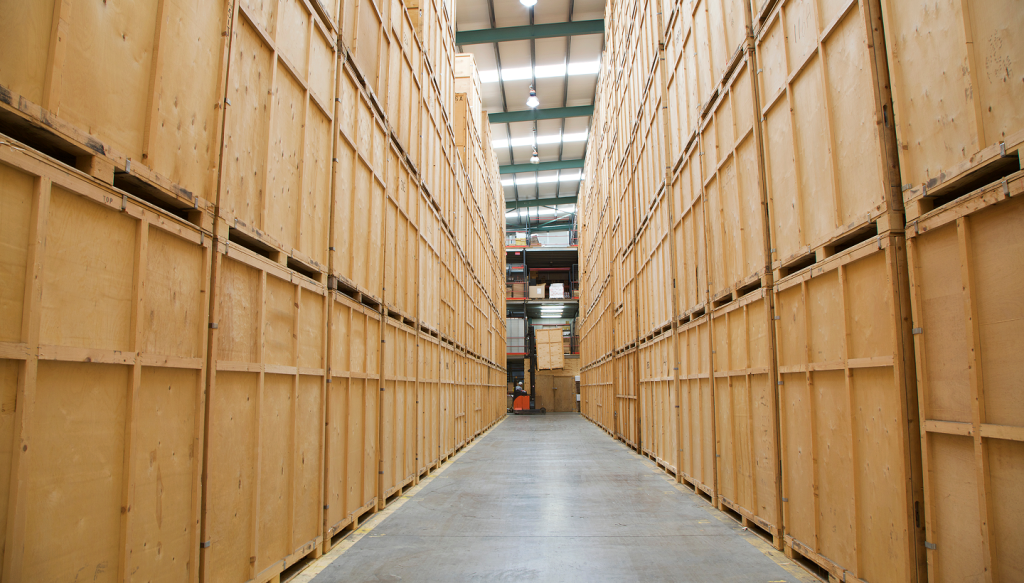
About 30% of Mountain House households rent, and since there are so few apartment buildings, most of them rent houses or townhomes. That means a lease-end move here is usually a full-house move, not a one-bedroom apartment. Rental vacancy is close to zero in the Census estimates, so renters often move to another house in town and need tight timing between the two leases. We can split a move across two days or hold items in storage if your dates don’t line up.
Which Items Do We Plan For Most in Mountain House?
Some items come up again and again in Mountain House homes and need extra care or equipment:
- Large sectional sofas and king beds bought for big rooms
- Home gym equipment and exercise bikes
- Wall-mounted TVs and home theater setups
- Garage refrigerators and chest freezers
- Standing desks and multi-monitor home offices
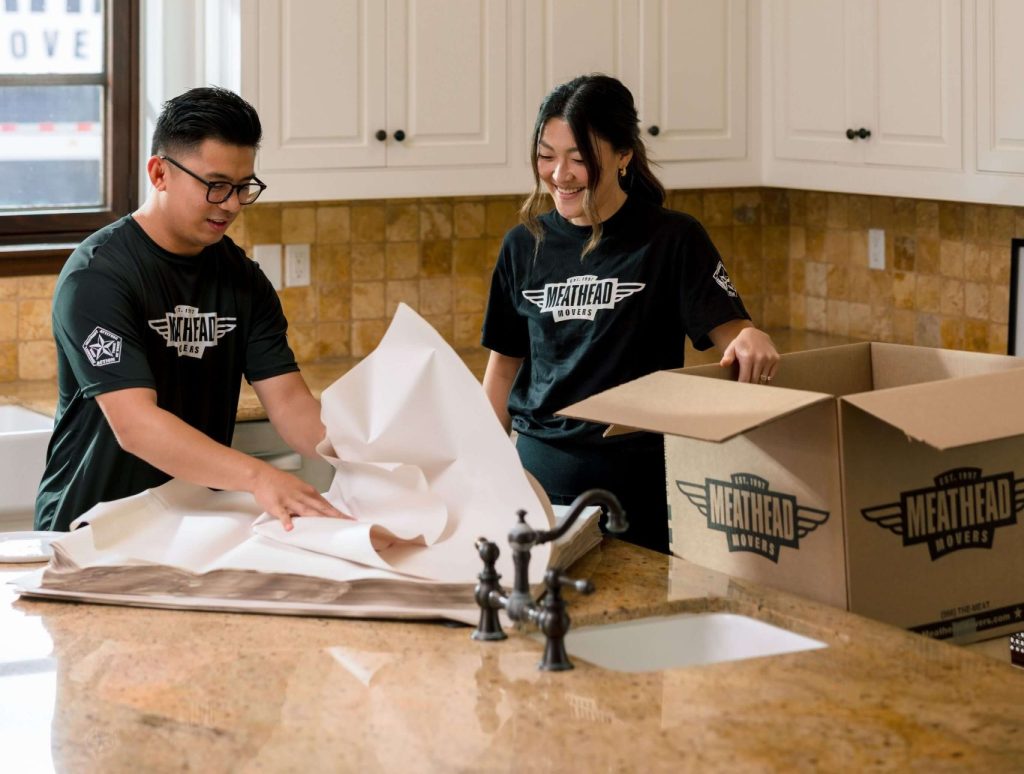
For valuable or fragile pieces, ask about our Packing and Valuation options when you book.
Do We Handle Commercial Moves in Mountain House?
Yes, on a smaller scale. Mountain House is mostly residential, and most residents work outside town. The biggest local employers are public ones: Lammersville Unified School District, which runs a K-8 school in each village plus Mountain House High School; the City of Mountain House, with City Hall on East Main Street; and San Joaquin Delta College’s South Campus on Central Parkway. The rest of the commercial work here is small offices and storefronts in the village retail centers. We also move plenty of home offices. Larger business moves usually happen in Tracy’s logistics and industrial areas along I-205, and we handle those too.
How Do School Calendars Shape Mountain House Moves?
Every public school in Mountain House belongs to Lammersville Unified School District, and its calendar sets the city’s summer moving season. Lammersville’s official 2026-27 calendar has these dates:
- First day of school: Early August
- Fall break: Early October
- Thanksgiving break: November 23 to 27, 2026
- Winter break: December 21, 2026, to January 1, 2027, with January 4 also off
- Spring break: March 29 to April 2, 2027
- Last day of school: Friday, May 28, 2027
School ends in late May and starts again in early August, so summer moves fall in a window of about ten weeks. Families with kids in school tend to book the first weeks of June and the last two weeks of July, and those dates go fast.
Do College Schedules Affect Mountain House Moves?
Not much. Delta College’s South Campus at Mountain House is a commuter campus with no dorms. Student moves here are mostly young residents leaving for UC and CSU campuses in August and September, then coming home for summer.
When Is the Best Time to Move in Mountain House?
For the easiest booking and mild weather, choose a Tuesday, Wednesday, or Thursday in the middle of the month, in October, November, March, or April. The National Weather Service Sacramento office covers Mountain House and issues heat advisories and winter storm alerts for the area.
When Do Mountain House Moving Dates Fill Up?
These are the Mountain House dates that book out first:
- Early summer: May 29 through the end of June, right after Lammersville’s last day
- Late July: The final stretch before school starts in early August
- Month-end: The last and first days of each month, when house leases turn over
- Saturdays: Weekend dates go first all year
How Far Ahead Should You Book a Mountain House Move?
Book 2 to 3 weeks ahead for most Mountain House moves, and give yourself more time in these cases:
- June and July: 4 to 6 weeks ahead
- Month-end weekends: 4 to 6 weeks ahead
- Moves from the Bay Area: 3 to 4 weeks ahead, so we can plan around Altamont Pass traffic
- Five-bedroom homes with full packing: 3 to 4 weeks ahead to schedule packing days
How Does Valley Weather Affect a Mountain House Move?
Based on daily station records from 1991 to 2020 at the Tracy Pumping Plant weather station, about three miles north of town, July highs average about 94 degrees and August about 93. January highs are about 57, with mornings near 40. The area gets about 12.3 inches of rain a year, almost all of it between November and March. These are the conditions we plan for:
- Summer heat: We start early from June through September. Candles, vinyl records, electronics, medications, and plants should ride in your car.
- Winter rain: We put down floor protection and keep boxes covered between the door and the truck.
- Dry months: June through September bring almost no rain, which makes summer the easiest season for loading, if not the coolest.
Which Events and Access Rules Affect Mountain House Moves?
The City’s events are big for a town this size; the City says each one draws 1,000 to 4,000 people. Two series affect moving days most:
- MoHoHo Holidays: Each December, with the Electric Holiday Parade of Lights, a tree lighting, and a holiday market
- Music in the Park: Summer Saturday evenings at Central Community Park, with overflow parking around Main Street and Giotta Street
We avoid late-afternoon jobs near Central Community Park on event days.
What Access Rules Apply Around Mountain House?
Some Mountain House moves need extra planning before the truck arrives. These are the access issues we work around:
- City truck rules: Large and oversized vehicles can park on residential streets only while serving a home, and never overnight.
- Short-term permits: Containers, trailers, or rental trucks parked overnight may need a City permit.
- School zones: Every village has a K-8 school, so we avoid nearby streets at bell times.
- Road work: The City has been re-timing signals on Great Valley Parkway, Central Parkway, and Arturo Boulevard, and we check for lane closures before moving day.
- Freeway work: We check Caltrans District 10 notices for I-205 before scheduling.
How Much Does a Local Move in Mountain House Cost?
Every Mountain House move starts with a free, no-obligation quote, and your total depends on crew size, time on the job, and the drive between homes. California’s rules for hourly local moves apply to every Mountain House job:
- MAX 4 tariff: Local household goods moves follow Maximum Rate Tariff 4, now administered by the Bureau of Household Goods and Services.
- Annual review: Public Utilities Code Section 5191 requires MAX 4 rates to be adjusted at least once a year, on or right after January 1.
- Double drive time: Billable time equals loading time plus unloading time plus twice the actual drive time between your old and new home.
- No warehouse travel: You don’t pay for the drive from our warehouse to your first stop or back from your last stop.
- Multiple trips: When a move takes several trips between the same two addresses, double drive time applies to the first trip only.
- Accurate records: Movers must track time to the minute and provide the Important Notice About Your Move form, plus a Change Order for Services if plans change.
A move inside Mountain House usually takes 5 to 10 minutes of driving, so the size of the home drives the cost. Typical map estimates put Tracy about 10 to 20 minutes away and Discovery Bay or Lathrop about 20 to 30 minutes. Livermore is about 20 to 30 minutes over Altamont Pass when traffic is light, and Pleasanton or Dublin about 30 to 40. Moves to San Jose can take an hour or more at rush hour. Since drive time is billed twice, we plan pass crossings for midday whenever we can.
What Adds Hours to a Mountain House Move?
These Mountain House conditions are the most likely to add time to your invoice:
- Altamont Pass and I-205 commute traffic on the drive, billed at double
- Four- and five-bedroom homes with bedrooms upstairs
- Full garages, home gyms, and backyard playsets
- Curved streets and cul-de-sacs where the truck has to park farther from the door
- School bell-time traffic near the village schools
- Summer afternoon heat
How Can You Save on a Mountain House Move?
A few choices can keep a Mountain House move on budget:
- The Meathead Hustle: Our Athlete Movers jog between loads, so hourly moves finish faster.
- Midday drives: Crossing Altamont Pass between rush hours cuts drive time, and that time bills twice.
- Clear the garage first: Sorting tools, sports gear, and storage bins before moving day shortens the load.
- Midweek dates: Tuesday through Thursday in the middle of the month is easier to book.
- Loading/Unloading and On-Site Labor: Lower-cost help if you’re driving your own rental truck.
- Payment plans: Qualifying customers can pay over time through Affirm.
What Mountain House Customers Say
Ready to plan your Mountain House move? Request a free quote online or call our Hayward branch at (510) 422-2051, and we’ll plan the truck, the drive, and the crew around your home and your dates.
Let’s Make Your Move Happen
Wherever you’re headed next, the Mountain House Meathead team is ready to get you there, with hustle, heart, and total professionalism.